Know your army before declaring War – Jamal Al Ajmi, Kuwait, 2009
Author: Jeremiah
-
Shift Happens
[youtube=http://www.youtube.com/watch?v=cL9Wu2kWwSY]
Created by Karl Fisch in 2006 -
Productivity – How to Get the Most from Your Team: Have a Collaborative Work Culture
Do you operate a fear based work culture or a collaborative work culture?
It’s easy to tell: just take a break, have a holiday. Come back to your work place and if it based on fear you will find work has slowed to a standstill.
A collaborative work culture and you’ll wonder why came back – performance may have actually improved!
Now we humans are a learning animal – we learn from each other – for good or for bad. Having the experience I have in the engineering business (the consultancy or working for hours business – see my presentation on how to measure business performance here) I have seen the effect of focus on maximising revenue alone: training falls by the way side. Or if it does occur, it is focused on technical, task related skills. That leaves us in the least desirable learning environment: informally from each other!! In an environment like this leadership and managerial skills are taken for granted and left to “brew” in the culture of the company. Managers modeled their styles on the only thing they have – their own managers. And if their own managers were promoted engineers – technically orientated, not people oriented – well that “brew” will be interesting indeed.
What’s new? Most companies actually run like this: focusing on short term immediate results, deferring training and improvement to a another day, “when things get quiet”. I suppose the confusing element with selling hours for a business is that you are actually trying to buy and sell the same “thing” you need to manage: people.
Confused… How is this related to the culture?
Well consider where fear usually comes from? It’s a fear of something? In business, as an employee, it is a fear of what? Loosing that job of course, and that comes if the boss perceives you as not performing (whether you are or not is a different matter). And there will be fear of being found out that you really don’t know what you are doing. Because for a technically trained person to have the wrong answer, is to be a failure. It’s black or white, pass or fail.
From what I have just described – a work team where there’s no formal training in how to lead, how to manage, even how to communicate, the fall back position is to manipulate people like inanimate objects – you can expect that fear will be a natural outcome. Getting promoted into a position you’ve never been trained you will naturally be fearful. And worse, being fearful of anyone finding out that you don’t know.
By the way, don’t bother hiding – it’s always obvious to your team and your managers if you are struggling. It’s how you deal with that struggle that your managers are interested in. With your team, lie to them and you loose their respect. Loose their respect and you loose your team.
That’s why I enjoy collaborative cultures the most: continual feedback, formal, informal, positive, negative, eliminates the fear.
A culture where the leader recognises that a shortfall in team member is a shortfall in their ability to lead. A culture where the leader knows that to improve their team they must first improve themselves.
But it does take courage.
Courage is not having no fear – that is fool hardy. Courage is acting despite your fear.
This is the basis behind the collaborative work culture instilled by Ricardo Semler.
Here’s a great lecture by Ricardo at MIT. He says something very fundamental about the predominant way of working in the 21st century: collaboration.
A meritocracy is another word for it.
by Jeremiah Josey, August 2009
-
An Inconvenient Truth – 3 and a bit Years On (s)
I was recently watching “An Inconvenient Truth” by Al Gore again.
Again I was reminded of a large amount of doubt and misinformation wandering about the world on the topic of global warming. Like a frightened rabbit, the lights of the oncoming truck have frozen the collective we to the armchairs and to inactivity.
Al Gore put it very well: out of a study of 928 scientific journals over a 10 year period all 100% documents concurred that man was causing climate change, principally from CO2 emissions.
In the face of this evidence, the objective of a small, well-funded group was to “Reposition Global Warming As Theory rather than Fact” (from a leaked internal document).
Are they succeeding? Simply, Yes.
A public survey of popularist non-scientific articles (636 over 14 years) showed that a massive 53% throw doubt on whether global warming is an issue or not.
Has anything changed in the 3 or so years since this film?
It appears not.
I wondered what was happening with the melt rates on Greenland in recent years, since the film. A quick search of the web revealed that the highest rate ever recorded was in 2007.
Then I came across this article dated 27th May 2009. Here’s an excerpt: http://www.ucar.edu/news/releases/2009/sealevel.jsp
…To assess the impact of Greenland ice melt on ocean circulation, Hu and his coauthors used the Community Climate System Model, an NCAR-based computer model that simulates global climate.
They considered three scenarios: the melt rate continuing to increase by 7 percent per year, as has been the case in recent years, or the melt rate slowing down to an increase of either 1 or 3 percent per year.
If Greenland’s melt rate slows down to a 3 percent annual increase, the study team’s computer simulations indicate that the runoff from its ice sheet could alter ocean circulation in a way that would direct about a foot of water toward the northeast coast of North America by 2100.
This would be on top of the average global sea level rise expected as a result of global warming. Although the study team did not try to estimate that mean global sea level rise, their simulations indicated that melt from Greenland alone under the 3 percent scenario could raise worldwide sea levels by an average of 21 inches (54 cm).
If the annual increase in the melt rate dropped to 1 percent, the runoff would not raise northeastern sea levels by more than the 8 inches (20 cm) found in the earlier study in Nature Geoscience.
But if the melt rate continued at its present 7 percent increase per year through 2050 and then leveled off, the study suggests that the northeast coast could see as much as 20 inches (50 cm) of sea level rise above a global average that could be several feet. However, Hu cautioned that other modeling studies have indicated that the 7 percent scenario is unlikely.
In addition to sea level rise, Hu and his co-authors found that if the Greenland melt rate were to defy expectations and continue its 7 percent increase, this would drain enough fresh water into the North Atlantic to weaken the oceanic circulation that pumps warm water to the Arctic. Ironically, this weakening of the meridional overturning circulation would help the Arctic avoid some of the impacts of global warming and lead to at least the temporary recovery of Arctic sea ice by the end of the century.
This is a confusing article. It starts with an ice melt rate of 7% per year – a measured rate, but shifts to discuss melt rates of 3 and 1% which are assumed and in the future (2050 and 2100). Why is this? Confused? Wondering what the point is? 7%, 3% 1%, levelling off? Meridional shifts??
Reference to the recent melt increase rate of 7% per year is obfuscated in the article. The key observation is: melt rates in Greenland have been increasing at 7% per year. Why focus on less alarmist scenarios of 3% and 1%?? Less alarming I assume!
The assumption is that by 2050 the melt rate “levels out”.
This doesn’t make sense. The earth is warming? Why would melting ice slow down? Wouldn’t it actually get faster?? Aren’t CO2 levels at all-time high?? They aren’t decreasing and there is no expectation of them to reduce to below pre-1900 levels for many 100’s of years. So why would the melt rate reduce from 7%? One would expect it to increase!!
Let’s look at some facts a little more clearly.
In 2006 the estimated ice melt rate was 239 cubic kilometres per year.
In 2007 the ice melt rate was 592 cubic kilometres per year.
There are 2.85 million cubic kilometres of ice in total in Greenland
The 7% increase per year was determined by looking at the change in earths gravity.
With an opening comment like this one: “In the past, the Greenland ice sheet has grown when its surroundings cooled, shrunk when its surroundings warmed and even disappeared completely when the temperatures became warm enough.” ; it kind of says, “ho-hum, what’s the problem. This stuff happens all the time”.
Well, there’s no problem really. Just a few extra meters of sea level, no freshwater in central Asia and extreme arid conditions in what are presently bread bowls of the world. Not much when you look at after all.
This does happen, but the natural cycles are every 10,000 years or so. Plants and animals (including us) can adapt over that time frame. But over a decade? They – and we – cannot.
Al Gore portrayed the equivalence of humans very well with the image of the frog in the warming water…
Unfortunately, I don’t expect any helping hand to come from the sky to pull us from the rising, warming waters. We’ll just have our equivalent “boiling alive”, well most of the human race will anyway.
Major climate change is here to stay. CO2 levels, like that of CFCs, are at highest levels ever recorded or measured in the last 650,000 years.
Melt rates are measured to be increasing at 7% per year.
And with the Antarctic showing evidence of beginning the melting process as well.
Buy a boat!
On a less alarmist note, I created my own “climate change model” to predict sea levels dependent solely on melt rates from Greenland. I assumed all ice cap meltwater goes into the sea, and I assumed no makeup from snow.
Being an exponential relationship, nothing really happens until towards the end, which is kind of the scary thought – lots of nothing for many years, and then relatively quickly meters of water in only a handful of years. In the early years, it’s all nice and small incremental change, but as rates increase faster and faster the power of compounding kicks in. In less than 39 years, sea levels rise by 7.2 meters.
I’ve ignored the very high increase in melt rates from 2006 (195 cubic km per year) to 2007 (592 cubic km per year). (That’s a 200% increase, not 7%).
If one uses that exponential relationship, then Greenland ice cap and the sea levels will rise by 7.2 meters by 2048 – only handful of years away really. I’ll be keeping an eye on what the melt rates are doing in Greenland!
Here are the results:
Assumptions 2,850,000 Current Total Greenland Ice Mass (cubic kilometres) 195 2006 melt rate (cubic kilometres per year) 7.2 meters of sea-level rise if entire Greenland ice mass melted 0.50 2006 Sea level rise per year from current Greenland Melt (mm) 7.0% Increase in annual melt rate 5.0% Acceleration of Increase of melt rate Year Melt Rate Increase Melt Rate Year Start Melt Rate Year-End Total Ice Mass Each Year Annual Sea Level Rise (mm) Total Sea Level Rise (cm) 2006 7.00% 195 209 2,850,000 0.51 0.05 2007 7.35% 209 224 2,849,784 0.55 0.11 2008 7.72% 224 241 2,849,551 0.59 0.16 2009 8.10% 241 261 2,849,300 0.63 0.23 2010 8.51% 261 283 2,849,028 0.69 0.30 2011 8.93% 283 308 2,848,732 0.75 0.37 2012 9.38% 308 337 2,848,410 0.82 0.45 2013 9.85% 337 370 2,848,056 0.89 0.54 2014 10.34% 370 409 2,847,666 0.98 0.64 2015 10.86% 409 453 2,847,235 1.09 0.75 2030 22.58% 3,585 4,394 2,824,056 10.08 6.61 2035 28.81% 10,912 14,056 2,783,133 31.54 16.94 2040 36.77% 43,438 59,412 2,628,357 129.92 56.05 2041 38.61% 59,412 82,352 2,557,475 179.07 73.95 2042 40.54% 82,352 115,740 2,458,429 250.22 98.97 2043 42.57% 115,740 165,010 2,318,054 354.63 134.44 2044 44.70% 165,010 238,767 2,116,166 510.03 185.44 2045 46.93% 238,767 350,828 1,821,368 744.75 259.92 2046 49.28% 350,828 523,715 1,384,097 1104.69 370.38 2047 51.74% 523,715 794,706 724,886 1665.37 536.92 2048 ALL ICE GONE FROM GREENLAND = SEA LEVEL RISE 7.2 METERS It all happens in the last few years – as the last of the ice slips off the land, and sea levels rise exponentially.
This does not consider the West Antarctic ice sheet (another 7 meters of water if it melts).
I’ve seen a few less informed – or rather paid well by others – parade the Global Cooling myth, but I think for little more than ego aggrandisement and their hip pocket. I like this succinct summary:
“This hypothesis never had significant scientific support, but gained temporary popular attention due to a combination of press reports that did not accurately reflect the scientific understanding of ice age cycles, and a slight downward trend of temperatures from the 1940s to the early 1970s” http://en.wikipedia.org/wiki/Global_cooling.
Then have a look at the most vocal proponent Don Easterbrook
Just follow the money.
Hey, I’m going to grab a nice book or three, find a nice place and watch what happens over the next 10 years.
The last 10 have been a ripper for change across the planet. The next 10 will be a rip-snorter!!
Depending on the source, Albert Einstein referred to compound interest as the eighth wonder of the world, the human race’s greatest invention, or the most powerful force of the universe.
The sad fact is that for the next 30 years or so, the “measured” rate of increase will be small. It is only the last 5 years where the water level rises dramatically. Boiling the frog? Absolutely.
That’s what this is all about.
There are solutions but that’s not what this blog was about, now was it?
From National Geographic
Another update from NASA – warm sea storms, 20 November 2016: NASA Report
Article from BBC on what’s happening in Greenland in 2019:
https://www.bbc.com/news/science-environment-49483580
Thanks for reading!
-
Aussie Humour
These were posted on an Australian Tourism Website and the answers are the actual responses by the website officials, who obviously have a great sense of Aussie humour.
__________________________________________________
Q: Does it ever get windy in Australia ? I have never seen it rain on TV, how do the plants grow? ( UK ).
A: We import all plants fully grown and then just sit around watching them die.
__________________________________________________
Q: Will I be able to see kangaroos in the street? ( USA )
A: Depends how much you’ve been drinking.
__________________________________________________
Q: I want to walk from Perth to Sydney – can I follow the railroad tracks? ( Sweden )
A: Sure, it’s only three thousand miles, take lots of water.
__________________________________________________
Q: Are there any ATMs (cash machines) in Australia ? Can you send me a list of them in Brisbane , Cairns ,Townsville and HerveyBay ? ( UK )
A: What did your last slave die of?
__________________________________________________
Q: Can you give me some information about hippo racing in Australia ? ( USA )
A: A-Fri-ca is the big triangle shaped continent south of Europe ..
Aus-tra-lia is that big island in the middle of the Pacific which does not
…. Oh forget it. Sure, the hippo racing is every Tuesday night in Kings Cross. Come naked.__________________________________________________
Q: Which direction is North in Australia ? ( USA )
A: Face south and then turn 180 degrees. Contact us when you get here and we’ll send the rest of the directions.
_________________________________________________
Q: Can I bring cutlery into Australia ? ( UK )
A: Why? Just use your fingers like we do.
__________________________________________________
Q: Can you send me the Vienna Boys’ Choir schedule? ( USA )
A: Aus-tri-a is that quaint little country bordering Ger-man-y, which is ….
Oh forget it. Sure, the Vienna Boys Choir plays every Tuesday night in Kings Cross, straight after the hippo races. Come naked.__________________________________________________
Q: Can I wear high heels in Australia ? ( UK )
A: You are a British politician, right?
____________________________ ______________________
Q: Are there supermarkets in Sydney and is milk available all year round? ( Germany )
A: No, we are a peaceful civilization of vegan hunter/gatherers.
Milk is illegal.__________________________________________________
Q: Please send a list of all doctors in Australia who can Dispense rattlesnake serum. ( USA )
A: Rattlesnakes live in A-meri-ca which is where YOU come from.
All Australian snakes are perfectly harmless, can be safely handled and make good pets.__________________________________________________
Q: I have a question about a famous animal in Australia , but I forget its name. It’s a kind of bear and lives in trees. ( USA )
A: It’s called a Drop Bear. They are so called because they drop out of Gum trees and eat the brains of anyone walking underneath them.
You can scare them off by spraying yourself with human urine before you go out walking.__________________________________________________
Q: I have developed a new product that is the fountain of youth. Can you tell me where I can sell it in Australia ? ( USA )
A: Anywhere significant numbers of Americans gather.
__________________________________________________
Q: Can you tell me the regions in Tasmania where the female population is smaller than the male popula tion? ( Italy )
A: Yes, gay night clubs.
__________________________________________________
Q: Do you celebrate Christmas in Australia ? ( France )
A: Only at Christmas.
__________________________________________________
Q: I was in Australia in 1969 on R+R, and I want to contact the Girl I dated while I was staying in Kings Cross. Can you help? ( USA )
A: Yes, and you will still have to pay her by the hour..
__________________________________________________
Q: Will I be able to speak English most places I go? ( USA )
A: Yes, but you’ll have to learn it first
__________________________________________________
Posted by Jeremiah Josey
-
Quotes from Colin Powell
The less you associate with some people, the more your life will improve.
Any time you tolerate mediocrity in others, it increases your mediocrity.
An important attribute in successful people is their impatience with negative thinking and negative acting people.
As you grow, your associates will change.
Some of your friends will not want you to go on. They will want you to stay where they are.
Friends that don’t help you climb will want you to crawl.
Your friends will stretch your vision or choke your dream.
Those that don’t increase you will eventually decrease you.
Consider this:
- Never receive counsel from unproductive people.
- Never discuss your problems with someone incapable of contributing to the solution, because those who never succeed themselves are always first to tell you how.
- Not everyone has a right to speak into your life.
- You are certain to get the worst of the bargain when you exchange ideas with the wrong person.
- Don’t follow anyone who’s not going anywhere.
With some people you spend an evening: with others you invest it.
Be careful where you stop to inquire for directions along the road of life.
Wise is the person who fortifies his life with the right friendships.
If you run with wolves, you will learn how to howl. But, if you associate with eagles, you will learn how to soar to great heights.
A mirror reflects a man’s face, but what he is really like is shown by the kind of friends he chooses.
The simple but true fact of life is that you become like those with whom you closely associate – for the good and the bad.
Note: Be not mistaken.
This is applicable to family as well as friends.
Yes…do love, appreciate and be thankful for your family, for they will always be your family no matter what.
Just know that they are human first and though they are family to you, they may be a friend to someone else and will fit somewhere in the criteria above.In Prosperity Our Friends Know Us.
In Adversity We Know Our Friends.Never make someone a priority when you are only an option for them.
If you are going to achieve excellence in big things, you develop the habit in little matters. Excellence is not an exception, it is a prevailing attitude.
These quotes are from Colin Powell, a recent United States Secretary of State.
Posted by Jeremiah Josey
-

Leveraging Resources – Saving the Whales, and Dugongs
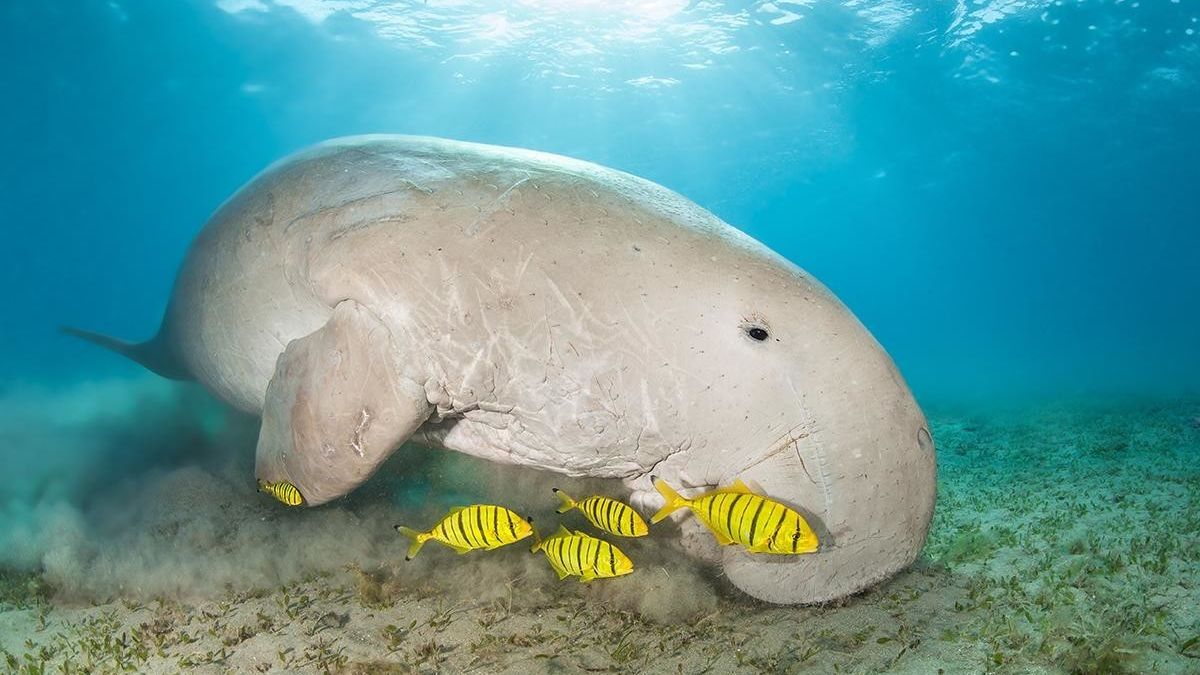
At the same time as I building my butane sphere I was also “Saving the Whales” or rather the dugongs.
You see, the BP refinery was sitting at the mouth of the Brisbane River on a small peninsular of reclaimed land from the 1960’s. Every 6 to 36 hours a huge crude oil ship would turn up to disgorge about 100,000 barrels of oil so this 80,000 barrel per day refinery could continue to operate.

Where the river enters the ocean is called the Moreton Bay Marine Park. The park is the only place in the world where significant populations of dugongs (and sea turtles) can still be found close to a major metropolitan centre. A failure and leak of the crude oil delivery pipeline would be devastating.
And guess what… The crude oil delivery pipeline had cracks in it. Yes, it was going to leak. Soon.

Bulwer Island Refinery Snaking over the Brisbane River and supported on marine pylons about 5 meters above the water, this 20″ pipeline installed in 1965 was designed in the day for ambient temperature crude oils. Light, clean crude oils running at the temperature of the water it was suspended above. The allowance for thermal expansion (steel expands at about 11 x 10^(-6) meters per degree Celsius) was a series of direction changes placed in the pipeline’s length.

Steel gets longer when it gets hotter. It’s go to go somewhere. It breaks things – and itself if you try and stop it from moving. There where 4, simple butt mitred welds holding the pipe together. The quality of the welds where also terrible and not helping matters. The welds where like a seagull had had a dose of bad sardines. I am a welding inspector also.
There’s nothing wrong with a design like the pipeline had. Until that is, you start to run hotter crude oil through it. By the time I had arrived the refinery in 1994 – my first gig after leaving uni – the refineries’ inspection department was dutifully monitoring and reporting on the growing cracks in these mitred joints. The crude oil the refinery was processing was heavier and waxier and needed to be pumped at temperatures around 60 degrees. That’s enough for a bad skin burn. The pipe was flexing and moving so much it was pushing other service pipes off the shared pipe support.
And the main pipeline feeding the refinery was cracking.
I was tasked to fix it.

Quotes and estimates from “consultants” where coming in above AUD 10, even 25 million to make the repairs. And I did it for less than AUD 250,000/-.
This is what I did.
First I put aside the excitement of such a large project – I had only been at the refinery for 6 months, and had already saved several million dollars by the time this task was given to me (that’s another story). Then I walked the pipe. Up and down the 1300 or so meters above the river, breaking every HSE rule there was. And the 1,000 meters or so on dry land. I was looking at the way the pipe was moving. The cracks were clearly visible, made even more so by the white die being used for the mag- particle inspection. I’m also an NDT inspector.
The next thing I did was create a stress analysis model of the pipeline using AutoPIPE – a cool and pretty straight forward tool. I created the model from scratch using old refinery blue prints and verification on site. The model showed that the cyclic stresses where growing the cracks but they would never go critical and rupture. That was good news. But a leak is a leak and it had to be fixed.
By the way, if you don’t know much about metals, steel has a “critical crack length” which means that when a crack gets to a certain length in a piece of steel (or any metal or material too), the piling up of lattice dislocations locks up and the metal experiences a brittle, sudden failure. The 1 inch thick steel of the pipeline walls was below the critical crack length at the stresses it was experiencing so the metal would continue to tear and never rupture. It would leak into the river. Not explode into the river.
The next thing I did was walk the pipeline again and I noticed something interesting. The consultants were telling me that the only thing to do was put an expansion loop out over the water section of the pipeline. New marine pylons would be required and that is where the expense was coming from. I can still see the consultant rubbing his hands together now. [Protip: never ask a hairdresser “do I need a haircut?”]
But something didn’t feel right. There must be an easier way.

The Mother of all Expansion Loops When looking closer at how the pipe was moving I dived into the pipe design code ASME B31.3** and studied the appendices. And there it was: a beautiful mathematical formulae showing stress as a function of bend pressure AND bend radius. The larger the bend radius the lower the pipe stress. I could dial in a crack free stress by adjusting the bend radius of the pipe.
In the refinery piping game there are either Long Radius bends or Short Radius bends. This is what ASME B31.3 covers and people rarely go into the detail to use anything else. But there wasn’t enough space for either of the standard bends using the existing marine pylons. They just didn’t work. So, jumping back into my AutoPIPE model I set a temperature limit of 85 degrees (way above any crude oil that the refinery was capable of processing) and worked out what the acceptable radii needed to be for each change in direction for the pipeline. There were 4 changes in direction out over the water that needed special attention.
Then, armed with my trusty tape measure I went back out onto the pipeline (thanks HSE) and checked if there was enough space for movement at my high temperature design with special long radius bends. There was.
Eureka!
The next step was to triple validate my calculations. I re-did them manually. I talked to everyone I could about my design. Even the refinery’s main advisory consultant – a former employee and friend of the refinery manager that found an office outside the fence paid more than one inside. He could find nothing wrong with my approach but he refused to validate my work in writing. I think I know why today. So I finally sent off a CYA letter to ASME in the USA, copy to the refinery manager, explaining that everything I was doing was within code and to come back to me if there was a problem.

The Main Special Radius Bend They never did, and I wasn’t waiting for them to answer. I knew what I was doing.
The work would be hot, meaning there could be explosions if things went wrong, and that meant lots of precautions. The refinery manager had also made it clear to me: not a single drop of oil could reach the river. Of course. Was I stupid? Dugongs don’t like oily food. They eat sea grass.
Then in short succession I drew up the designs, had the 4 special bends made in Sydney and shipped the 900 km to the refinery, tendered and awarded the construction work and worked out a plan to undertake the repairs all within a 12 hour working window so there wouldn’t be a refinery shut down or a hold up to the next ship wanting to arrive and deliver oil. I had 8 crews working simultaneously to cold cut, bevel and prepare the pipe and insert the prepared new pipe spools. There would be 20 cold cuts being made at exactly the same time. It was pretty cool to watch, and Hans Walter, owner of the construction company doing the work was amazing. I learnt a lot from Hans and his leading man.
I had earlier negotiated with the operations team to hold a crude delivery ship over longer than necessary (demurrage is an expensive thing) and pump 100,000 barrels of sea water through the pipeline. I had another project on the go: raising the height of a crude oil storage tank by adding an extra strake so secondary seals could be fitted to reduce VOC releases (Tank 104. That’s another story). The tank was ready for hydro-testing, so I needed to fill it up with a lot of water fast. It was a perfect synergy: clean the pipe, fill the tank. The water would be released back into the river using the refineries biological water treatment facility. Oil is a natural material after all and bugs will eat it if given the right conditions. The ops team where more than happy to oblige. By the way, I held the next ship for a few extra hours too, getting it to fill the pipeline with water so we could hydrotest it – an important final task to ensure there where no leaks.
Last Landfall Loop In preparation for the opening of the pipe I had a survey done of the pipeline level so I could calculate how much water was still laying in the pipe once it was washed out. Then I negotiated with the Port of Brisbane Authority to “borrow” several floating barges and had them fit them with tanks sized according to how much water would come out at each location. Later analysis showed that zero oil remained after the last crude ship had filled my tank with 100,000 barrels of sea water the night before. I couldn’t even make my hands dirty by rubbing the inside of the pipe when it was finally cut open in many places at once.
It all went off without a hitch. There where three notable events:
- During the draining of the remaining water (holes where hand drilled at the two of the main sections to be cut out – that’s what my pipeline remaining water level analysis showed) one of the drain hoses fell out from the tank on the floating water barge. I leapt down from the scaffolding and in a single bound – like superman leaping over a tall building – launched over the tank and sliding down the other side, in a single motion grabbing and re-inserting the itinerant hose back into the tank opening. It happened so fast no-one had even moved from their initial shocked position. The water than escaped stayed on the barge.
- The refinery manager criticised me for leaving “6” flanges over the water”. There are 10 of them. They where needed to pull out the welding balloons used to ensure a gas free safe welding environment. These 6″ nozzles had been attached and hot tapped in preparation for the 12 hour working window, as had most of the work, pipe supports, earth works on land etc. But I wasn’t worried. I had used special spiral wound gaskets with extra sealing capacity far beyond what would have been necessary. And written up a special procedure for closing the nozzles which including torquing the bolts, There’s never been a leak.
- I lost my temper once when at one of the bends, the smallest one, there was a lone worker who didn’t wait for the draining to be completed, and started his cutting too early. Luckily he was at a high point in the pipeline and luckily I arrived to check in on him as the water started to escape. He stopped cutting and held in the leak with his hand once I stopped yelling at him. It took a while before the water drained away from his location and he could continue his work.
The whole project took 5 months to complete. It was mostly a coordination exercise and it worked perfectly. It wouldn’t have happened without the full support of all the team players to carry out the strategy once it had been determine as sound and robust.
Full credit goes to my favourite Russia Alexy Lydov. A veteran at the refinery and in his late 70’s, he was there, direct from Russia, when it was built 1964/1965. I made a point of discussing with him everything I did during my time at the refinery. It was his idea to use welding balloons to enable the special joints to be welded in safely. That made the whole plan workable. His practical and clever Russian style thinking aligned with my get-it-done, can-do approach. He also knew where all the refinery blue prints where, and every design aspect that was relevant to know.
** I wanted a more rigorous design code than what you get from using API pipeline codes. It was a refinery after all
-
Working with different cultures
Working in different countries and with people from different cultures is a great way to learn about your beliefs, your shortcomings and especially about your ego.
It’s like a mind game: working out how to get the best from your team when they come from China, Japan, South Africa, Sweden, England, Scotland, Sri Lanka, India, the Philippines or Malaysia!
The Japanese style is perhaps the best that I prefer for getting high volume of work done in a very short period of time – they just know how to work together. The Dutch are similar, but have more connection to the social component of their lives.
Having done business with South Africans I can appreciate the influences of English, Dutch – and the local environment – to give that particularly effective, selective approach to hard work: choose carefully, and dig in hard once the choice has been made. This is very similar to Australia in fact, and with each having similar cultural and environmental heritage it explains a lot: see if you can spot the differences between the Springboks supporters and the Wallabies…
When I came across the Ingelhart Values Map it helped a lot in my thoughts in this area: collaboration between cultures. The map has been created by the World Values Survey.
Read more about the World Value Survey and you’ll learn that it is estimated that the map covers perhaps 70% of influences of a culture. The map looks at Traditional (or religious) values versus secular rational values, together with survival and self expression desires of a culture.
For example, take the Indian culture: over 1 billion people. They have a very strong follower trait. From the map India is more traditionalist and survival focused. This is reflected in higher birth rates, and can be seen in all the great Indian cities like Mumbai, Delhi and Kolkata where the infrastructure is pretty much as left in place by the British in 1948, just now it is in much poorer condition.
When comparing India with Australia, the similarity in strength placed on traditional values would support the notion of high popularity in each country for the very traditional game of cricket?
;o)
-
New Oil and Old Hopes – The Bakken Formation
I didn’t know about this one: The Bakken Formation in central USA.
A recent U.S. Geological Survey (USGS) report from April 10, 2008 documents the oil reserve in these rocks. Somewhere around 200 billion barrels that lie conveniently in the middle of the USA.
The USGS announced that there is about 25 times more oil to recover than previously thought. 25 times? That’s a big difference.
To put this quantity of oil into perspective, Saudi Arabia – the largest remaining reserves in the world – has about 200 billion barrels left, and Kuwait – where I am now – has about 50 billion barrels of oil left to go. [That’s about 70 years at current production rates ;o) ]
The Bakken however only has about 1%, or 2 billion barrels that is recoverable using current technologies.
Why so low?
The difference is that because of the poor flow charateritsics of oil in the shale formation (low porosity and low permeability). The Bakken oil doesn’t like to come out.
Still 2 billion barrels of oil is enough to drive the present US demand for about 1,000 days, or 2.7 years (at a consumption rate of roughly 20 million barrels per day).
Hardly seems worth it does it?
Then again, if you assume an oil price of USD 50 per barrel, 200 billion barrels is worth about 1 trillion USD dollars… Still a lot of bikkies, and hey! that’s similar to the amount of money recently used by the US government to bail out a few troubled banking and automotive companies.
So what if more could be extracted, using different techniques? You bet there are a lot of interested people looking at it right now.
By the by, I was close to a shale oil project in Queensland, Australia: the Stuart Shale Oil Project for Southern Pacific Petroleum (SPP were my clients when I was running a division of WorleyParsons).
These shale oil reserves – the Stuart and Rundel fields, a few billion barrels each I recall – are actually Kerogen: like the early stages of oil. It hasn’t had enough time, heat or pressure to become turn into liquid form. It’s hard crumbly black stuff. No oil at all!
That’s where man comes in: a retort is used to pyrolyze the oil shale turning it into a liquid form that can be refined using conventional oil refining processes.
Sounds messy doesn’t it.
It is.
And expensive.
CO2 emissions?? Wow! Don’t even go there.
I like the Swedish approach to oil: get off it all together! (They intend to by 2020).
-
What Goes Around…
In a small town in the United States, the place looks almost totally deserted. It is tough times, everybody is in debt, and everybody lives on credit.
Suddenly, a rich tourist comes to town. He enters the town’s only hotel, lays a 100 dollar bill on the reception counter as a deposit, and goes to inspect the rooms upstairs in order to pick one.
The hotel proprietor takes the 100 dollar bill and runs to pay his debt to the butcher.
The butcher takes the 100 dollar bill, and runs to pay his debt to the pig farmer.
The pig farmer runs to pay his debt to the supplier of his feed and fuel.
The supplier of feed and fuel takes the 100 dollar bill and runs to pay his debt to the town’s prostitute that, in these hard times, gave her “services” on credit.
The hooker runs to the hotel, and pays off her debt with the 100 Dollar Bill to the hotel proprietor to pay for the rooms that she rented when she brought her clients there.
The hotel proprietor then lays the 100 dollar bill back on the counter so that the rich tourist will not suspect anything.
At that moment, the tourist comes down after inspecting the rooms, and takes back his 100 dollar bill, saying that he did not like any of the rooms, and leaves town.
No one earned anything. However, the whole town is now without debt and looks to the future with a lot of optimism………
And that, ladies and gentlemen, is how most of the western nations (in particular the United States, Canadian and Australian Governments) are doing business today.
-

How to Become Insanely Rich
Authored by Jeremiah Josey, 18 June 2009
It has been more than 12 years since I built one of my first major capital projects. I was 24 at the time. I hunkered down to do everything that needed to be done to build a major piece of critical infrastructure in a multi-billion dollar refining operation. And I did it all within 12 months.
My project was only AUD 2 million, but it was fun. It was 12 months from literally cornering the lead process engineer in his office to size the capacity required (16 meters in diameter) [Pro tip: emails don’t work], specialised steel selection and shell plate manufacture, a QRA with Det Norske Veritas of Norway, Hazops, contractor selection – from the best in the world and a specialised ultra low NPSH vertical multi stage high pressure transfer pump. It was the largest and most sophisticated butane storage facility of it’s type in the Southern Hemisphere.
You know what my biggest lesson was? The payback. During the summer time, this storage sphere could store 1,000 tonnes of “waste” butane coming from the main refinery process over summer. It would be burnt in a huge flare stake previously. The butane could then be injected into the gasoline fuel mix during winter when the Reid Vapour pressure was lower. The payback for this AUD 2,000,000 investment: 3 months. Yes, only three. I did the calculation several times to validate it. Just to check I was doing it right. Over the past decade this assembly of concrete and steel has paid back something like AUD 100 million. With minimal costs. Now that’s an investment.

There’s me. The fireproofing is being applied to the legs behind me. You can see where it is here.
Here’s a montage of the construction.


-
The End of Royal Dutch Shell?
Today I read of the demise of Royal Dutch Shell – that huge unconscious behemoth employing 104,000 people around the world with 22B profits and revenues greater than USD300B per year.
Well it wasn’t the specifically the demise, but the decision – that defining moment that will lead to Shell’s demise – that I read about.
The article was in Professional Engineering, 25th March 2009, Page 4: Royal Dutch Shell has announced that it will no longer invest in renewable energy sources (wind, solar and hydropower). Whilst it will still remain a “committed member” of the Energy Technologies Institute (ETI)*, Royal Dutch Shell will invest in biofuels and carbon capture.
Why do I say that this is the beginning of the end for Royal Dutch Shell? Isn’t the world looking at carbon capture? Isn’t “clean coal” the new buzz word? Isn’t corn ethanol our salvation?
No they are not.
Carbon capture simply raises the costs of using existing fossil fuels, and defers the problem of carbon dioxide disposal to future generations.
Biofuels are not only expensive and marginally carbon neutral, they raise the cost of food for people, and increase the rate of degradation of the worlds remaining, dwindling farming lands.
Free, abundant energy from the Sun is the answer – captured by photovoltaics, wind power and hydro.
Remember, that wind is also created because of the Sun: hot air rises, and cool air rushes in to fill the gap: wind power is solar energy one step removed. Hydro: capturing the energy of falling water from rain caused by heating of the earth by the Sun, solar energy two steps removed.
Shell is missing an important factor: the rapidly reducing cost of producing electricity from solar panels.
By 2015 using the Sun to directly produce electricity from photovoltaics will be an economic reality for every one. The cost to produce electricity is presently around $0.20 per kWhr and with reducing manufacturing costs this will reach $0.10 per kWhr by 2015 – directly competitive with power from coal, with no government subsidies or incentives in sight!
This is supported by research from the RMI (Rocky Mountain Institute). [Here’s Amory Lovins, director of the RMI, speaking about it: Amory Lovins on winning the oil endgame]
First Solar: the worlds largest billion dollar manufacturer of solar cells is rapidly approaching 1 GigaWatt in annual production capacity. They are already manufacturing at $0.93 per Watt – this is as of the 30th of April 2009.
So why has Shell taken this monumental decision – not to invest in wind and solar – only a handful of years from the tipping point?
A few reasons:
Shell is a fossil fuel company making business by selling the stored energy of the sun for over 100 years. The leadership, the management, and hence the culture of Shell is fossil fuels. This inertia is difficult to refocus.
Fossil fuels are also still highly profitable: production costs are still less than $10 per barrel in most parts of the world (and here in the middle east, it’s less than 2), so there’s a heck of a lot of profit still to be made. And profit, well that will drive us for a long time to come.
The worlds present infrastructure, the system, is built on a fossil fuel economy. As a people we fear change, and strive to maintain a constant regular environment around us. This drives short term thinking and puts off long term decision making.
Perhaps Shell believe they can delay the tipping point?
Can they can buy up – and lock up – the new technologies. Yes, I suppose they could, in the short term. What lengths would you go to to protect a $300B business? You certainly have a lot of money to support what ever strategy you wanted!
For example, technology developed by Stanford R. Ovshinsky, leader in thin film photovoltaic and Li-Ion battery technology – was bought and locked up by Exxon Mobile in the early 2000’s. (Watch “Who Killed the Electric Car” for this reference). What has happened since? Newer, better technologies, made the purchase by Exxon redundant. It slowed the shift but didn’t stop it.
So what? So solar panels can make cheap electicity? Who cares? Well everyone will. When the cost of placing solar panels on the home roof is less than the annual fuel bill for the home car, then most people will want to switch to an electric car and charge it with the power collected from those solar panels (Electric car technology is more than suitable right now – see Tesla Motors, backed by one of the founders of Google, or the stylish two seater vehicle from Aptera Motors).
A shift will occur.
Four key things will happen:
1) Demand for electric cars will surge
2) Demand for oil will drop
3) Power generation will become decentralised, as consumers control the generation of their own electricity
4) Demand for coal will dropThe age of fossil fuels will be over.
And Shell, by the looks of their current policy will be over with it.
How long will the shift take? Perhaps 10 to 20 years after the tipping point is reached. Perhaps less. The first world war (1914 – 1918) was a war waged on crude oil. The diesel engine was developed a mere 25 years earlier in the 1890’s. Trucks, tanks, battlecruisers and even cars and planes using similar technology where all driven by refined crude oil was used for the first time on a huge scale during this war. It established the fossil fuel economy.
So the time frame for the next shift will be about the same, perhaps less because sharing the information can now happen at the speed of the internet.
What a time to be alive!
* By the way, Royal Dutch Shell has committed a paltry 50M GBP to the ETI over 10 years. The company profit presently exceeds 60M GBP per day.
-
Working smarter and not harder
When I was 13 years old, I was living with my family on a farm in far western NSW. This was “Outback Australia”.
A new local TV tower had been installed about 5 km away and so we could now watch Australia’s equivalent to the BBC without watching it through a blue plastic screen that was needed to cut back the snow. That also meant that the 100′ high tower above the farm’s homestead holding up our TV antenna was no longer needed.
The bigger boys – my mums’ brothers and her dad, Pop – took down the mast and it’s guy wires over the course of a few days and stored away the steel pipe. These where used used in building new stock yards and fences.
But they left the last 3 feet of pipe and the large buried concrete base the pipe was embedded in. And it was in an awkward, obvious location.
One day I decided to take it out. 🙂
From early morning until well into the afternoon I toiled, using crow bar, breaking bar, shovels (post hole and flat) and lots of water to loosen and remove the earth from around the concrete plinth.
The task seemed beyond me. My hands were raw with blisters – they had formed and broken many hours previously. But I had to rest – beside, Gran had arrived with lunch! I sat down on the grass and looked at the mammoth mass of concrete and pondered.
What is going on? Am I doing this the right way? This how you always take out something like this: you dig and dig until it falls over. But it doesn’t seem right. Besides it’s taking too long!
The process was working – hitting it on the side I could see that it was moving every so slightly. This was going to take days!
Then I realised: I don’t want to get this thing across, I want to get it up and then out.
What I need is to LIFT it….
An idea formed.
I went out the back to the large workshop we had and looked around.
There was always lots of stuff to choose from. There always is on the farm.
I found what I was after: two very sturdy short pieces of I beam – each piece weighing much more than me! I struggled, shoved, dragged and coerced each steel section to either side of the massive hole I had dug – concrete massif sitting smugly in the centre. Yes it was smiling at me.
I then carried across a long length of 4″ x 4″ SHS, and placed a 10 tonne hydraulic jacks on top in the middle of the SHS. The jack was one of those big ones you can use on a truck. Not a car one.
Getting the picture?
I then found some heavy duty steel chain and connected the chain to the pipe protruding out of the concrete.
Wrapping the chain over the lifting piston of the jack and tying it off on itself, I was ready.
I inserted the lifting lever into the jack, and with just two fingers I watched this massive concrete rise up out of the water and mud. I remember how funny it felt as I consciously exerted as little effort as I could.
Magic.
In a few short moments it was done.
I adjusted the chain once or twice, but once the connection with the ground was broken the concrete block was mine!
I tied the mass of concrete to a car and dragged it off into the scrub behind some gum trees. It’s still there to this day.
The lesson I have remembered every since: work smarter not harder.
Even today when I’m head down and focused on a problem, that feeling of “hang on, there’s an easier way” starts knocking and pretty soon, I’ll stop, reassess and find myself an alternative – my present day “jack and beam” solution.
There you have it. Work smarter, not harder.
PS, here’s a Google Maps link that will take you straight to the homestead!
Rostella Homestead -
Avoid Working with an A-H!
This is a great blog I came across recently by Guy Kiyosaki. I’ve posted a little bit of it below. You can find the entire post here:
…Mean-spirited morons are still running much of the workplace, and it’s time to take a stand. Most nastiness is directed by superiors to subordinates; so before taking a job, do your homework and screen them out in advance. (After all, avoidance is the easier than curing.)
To do this, I propose that you check your prospective boss’s references just like she’s checking out yours. I’m not suggesting that you ask your prospective boss for a list of references (you can try, but it may mean you don’t get the job).
Instead, do a LinkedIn reference check. First, look her up to determine if you have any common connections. If so, find out more from people you trust. Second, use the LinkedIn reference check tool to find people who overlapped with her in the past…
Read the whole post here: Guy’s No Asshole blog post.
Linkedin.com in a great tool for business. You can see my profile by clicking here: My Profile
-
The point of a spear, the edge of a knife
What is at the point of the spear? The edge of the knife? It is nothing.
Something, the metal, the material, what ever, sharpened to the point of nothingness. Behind the edge everything. Infront of the edge nothing.
And it is the more of nothing which makes the spear and the knife something.
Like our world: everything we see, the substance, the material. It is the nothing at the edge of the something. This nothingness makes our world everything!
-
The surge of US troops in Afghanistan is fundamentally flawed
Why? Because the strategy is short term focused, and forgets about what is really going on: a nation of disgruntled people with not much else to do, except wait for an exceptionally bleak future to roll over them. This disgruntled state is giving birth to the violent factions we now endeavor to “remove”.
Sending in brute force to quell the institute tribes of northern Pakistan and Afghanistan is akin to the invasion of Vietnam by the US in the 60’s and 70’s. That particular war failed because the local embedded defence forces knew what they wanted: to defend their home lands from invaders, to win at all costs. To fail was to loose not only their lives, but the identity of their people, their nation, everything they stood for. Their lives were secondary in this battle. The Taliban – and Al Qaeda – will do the same. Suicide bombers, bombings of public places like bars and accommodation units occurred in Vietnam as well – a dear friend of mine still has pieces of a grenade coming out of his body from one such attack by a child. These acts weren’t called “terrorist activities”.
The second much more fundamental reason for the failure that will become Afghanistan is the ancient knowledge that like-begets-like: bring in severe force against a group will only instil more retaliatory brute force in kind.
Additonally, local support from non-violent groups will tend to favour the local tribes, rather than the “invading” occupying forces and as the war drags on, this support will increase.
The World’s Fight Against Terror (it should be termed the “fright against terror”) means nothing to the people of Afghanistan. Food, basic shelter, education and a future to look forward to are their concerns.
So what is the answer? Again an ancient saying: “turn the other cheek”. Some 2,000 years old in some texts. Now I don’t mean walk away. Far from it.
Here is what will work: the US forces become a security force, an advanced form of police that enters the country with a specific task, not of attacking Taliban tribal groups (like Al Qaeda), but tasked with the defence of social and welfare infrastructure. This social welfare infrastructure is built in parallel – a Grand Master Plan – and defended by the defence initiative. This defence force will also protect the personal and private assets of individuals, thus allowing entrepreneurialism to flourish – a vital component of the establishment of a long term viable solution for the people of the region.
US money, UN money, world money, is spent to raise the standard of living for the Afghan people: to build and run schools, hospitals, sanitation, water supplies. Establish enterprises to grow and supply food, training, materials, trade, training. In short a future. Doing this will improve the living standard and the outlook for a people who presently have very little to look forward to, and will endear these people to those protecting them and this future.
I’m talking about rebuilding an entire social environment, building a nation, something that will be sustainable for the next 1,000 years! (Why not? We know what works and what doesn’t). (Sustaining the culture and lifestyle is an important element of this process).
What will happen if this is done? Well the Taliban’s key strategy now: suicide bombings will dwindle and become defunct. Why? Because prospect recruits will have an alternative: a future, something to drive them to live, not to die. Right now they have a bleak future, and with the oncoming escalation of war, of violence, even less to look forward to. Thus, with my proposed alternative strategy, the Taliban, and Al Qaeda will shrink: 1) because they will use up their resources (by blowing themselves up), 2) because recruiting will become harder and harder, there is a better alternative, and 3) because their like will defect, because of the better lives they can see growing up around them. Ultimately the need for them existing as an extremist group will cease to have any purpose.
Going in now with the intent to “crush the Taliban” will simply not work.
US President, Barak Obama, yesterday or even today stated “we have a clear goal to disrupt, dismantle and defeat Al Qaeda in Pakistan and Afghanistan, and prevent their return to either country in the future”. This is a futile and near sighted goal for the reasons I have outlined above.
OK, so let’s answer another question: what about the financial benefits of waging war outside your homeland. I go into this in detail at this post: The Business of War. The argument is that, in the short term, war makes is good financially for a nation. Not in the long term.
What is the main resistance to the build and defend strategy I have outlined? It is the status quo, inertia and simply human practice.
Nation building is the newest and boldest of human strategies that we may – or may not – be ready for.
Think of the increase in national GDP if public services were provided in foreign lands rather than the destruction, death and disarray brought by the mightiest defence force on the planet? (The US Navy is larger than the next 13 largest navies combined, and 11 of these are allies or partners).
Will it be hard to stay focused? Yes. Will it be hard not to ignore the innocent deaths that occur whilst the building commences? (There will civilian companies engaged in the infrastructure building. Yes it will be. But in the long term the solution will be far superior.
In Iraq right now (2 hours from where I sit), 1 in 3 people live without access to municipal water and only 1 in 5 have access to a sanitation service (sewage). Universities and schools are closed most days, doctors and teachers receive death threats telling them to leave the country, which most have. What is left? Now that the US are pulling out (yes they are – I see it most days on the roads here), what is being left behind? A victory? Bitter sweet indeed.
Yet, a new goal: Afghanistan?
Like the issues with Global Warming facing us, helping a disgruntled and deprived people, and building a nation for them – in their likeness, not ours – is a job for all of us and a challenge for our global society to shake from the shackle of brute force and isolated non-unifying solutions.
-
The Business of War
Waging war, being aggressive, using force is one of the oldest methods of trying to instil “obedience” or servitude in another. We do it between nations, inside our companies, our institutions, our schools and even within our families.
On a national scale, of course you want to avoid damage to your own civil infrastructure because it’s demoralising for the local population and difficult to justify or manage the truth of the devastation and death that war inevitably brings.
Let’s study the “economic” benefits of war, looking at the USA and the war effort in Afghanistan and Iraq.
For every soldier sent to war outside of the US mainland, what is the increase in Gross Domestic Product (GDP) for the country? How much in dollar terms is made, built, spent, acquired to send that single person away to wage war. What benefit does this bring the nation?
Let’s assume that the figure is USD1,000,000 per soldier per year. So if 20,000 troops are deployed in say, Afghanistan that means the GDP of the US increases by 20 billion dollars per year.
Now what does that mean? At a taxation rate of 30%, the government revenue is increased by USD 6 billion. This is more money to spend on health, infrastructure and other home base facilities. That’s good isn’t it?
Assuming that the average US wage is USD30,000, and assuming that half of the USD20billion per year is labour costs (the other half is materials) then that’s 330,000 people who are employed in this process. Isn’t that good as well?
In the short term yes. Very good.
In the long term, no. It’s terrible. It’s a downward spiral into high personal taxation, lowering world living standards, and police states (how else do you hang on to your income source?)
So, from this perspective, a foreign war, in simplistic terms taking the short term view, is good for the economy. And business will do what ever it has to so that it can continue, indeed thrive in times of war. Remember that Coca-Cola, a US company, invented the drink Fanta and sold it through subsidiary owned companies in German during the Second World War. There was an embargo on doing business with Germany – pretty much what is in place now with North Korea and Iran – so they invented Fanta, using ingredients sourced in Germany, to sell because they weren’t permitted to sell Coke. Before April 1917 the US was a neutral power in the Great War (World War I, or the Great War of Europe: 1914 to 1918), and was supplying materials and equipment to both the British and the Germans, despite the blockade that Britain had placed against Germany. During this same Great War, the German company Krupp sold brass to British companies that was turned into shell casings that was used by the British in Europe against German soldiers!
-
Lost in Translation
I had a very interesting experience the other night when buying a Viva internet account here in Al Khout, Fahaheel, Kuwait.
It was one of those small shopping kiosks you see spread along the center of the mall.
After I establishing that I wanted a service with Viva and I just pay 24 KD per month, I was told that I would get a free USB wireless dongle. I thought “Great, but I’ve got two laptops…”.
“Can I get two dongles” I asked and the answer was “yes, yes!”
Talking further about the two laptops, it was then explained that a wireless router could be obtained for an additional purchase of 25KD. OK good to know. Not needed by the sounds of it though.
OK, I understand: When I get an account. I get one free USB wireless dongle, apparently another free USB dongle if I ask for it, and if I pay 25KD I get a wireless router. The hardware would give me flexibility running the two X60 laptops my wife and I own.
So I go for it: I set up the account and get my free USB dongle. 2 minutes. Halas. Done! I then ask what about the other one, the other dongle, and yes, I can have one, but that’s another account – another 24KD per month.
Hang on, when I asked can I have another one, you said yes. Hmmm… OK, well that’s no good. I’ve got two laptops.
Just give me the wireless router instead. No problems, 25KD plus 24KD per month.
Huh?
Yes, it’s another account
But I only need one account. Just swap the USB dongle for the router and I’ll pay 25KD.
No, you’ll have to pay 50KD because we’ll have to cancel the account – there’s a 50KD cancellation fee, didn’t you read the contract you just signed?
But you said I’d get another USB dongle with the first account, and if I paid 25 KD I’d get a wireless dongle.
Nope – one bit of hardware, one SIM card. One SIM card – one account. To change you need to cancel the account, paying 50KD, and it can be set up.
But the account is only 30 seconds old?!
Not my problem. Billing look after it now.
Humph!
What happened? I got my wonderful mandoup Bashar Alainieh to sort it out for me: cancelling the first account (the one with the USB dongle) set up a new account (with the router) and not pay the 50KD cancellation fee. I made a note on the new contract documents saying this.
So what was lost in translation: Can I have another one? Of course, but you must pay for it too! 😮
-
Chicken Soup?
90% Chickens pair up for the mating season, i.e. choosing only one sexual partner.
50% of them split after the mating season (and go on to form other relationships the following season). The other 50% remain with the same sexual partner for successive seasons.
Humans have similar figures: 90% of people choose to have one sexual partner at a time (90% of us marry). Our divorce rate is 50%.
We are animals after all, but chickens?!!
Another interesting information about chickens:
The “pecking order” commences immediately the chickens hatch and is complete by 4 weeks. The order is then set for the rest of their lives. The strongest rooster never gets pecked; the weakest male and the weakest female are pecked constantly (with the weakest of the weak often perishing as a result).
See any similarities?
Is this where things like “Ethnic cleansing” come from?
And then consider, some of the strongest brightest minds who are living and have lived amongst us have issues that wouldn’t put them near the top of the pecking order if they were in a chicken coop: Stephen Hawkins has motor neuron disease, Richard Branson is dyslexic, Carl Sagan died prematurely from illness.
Do we have a fundamental “animal instinct” driving us one way to the “pecking order”, and another, creative expansive desire pushing us another?
I think so, but we’ll need to cross the road to find out!