Japan’s lost war, the propaganda that followed, and how ANZAC blood was used to write the story.
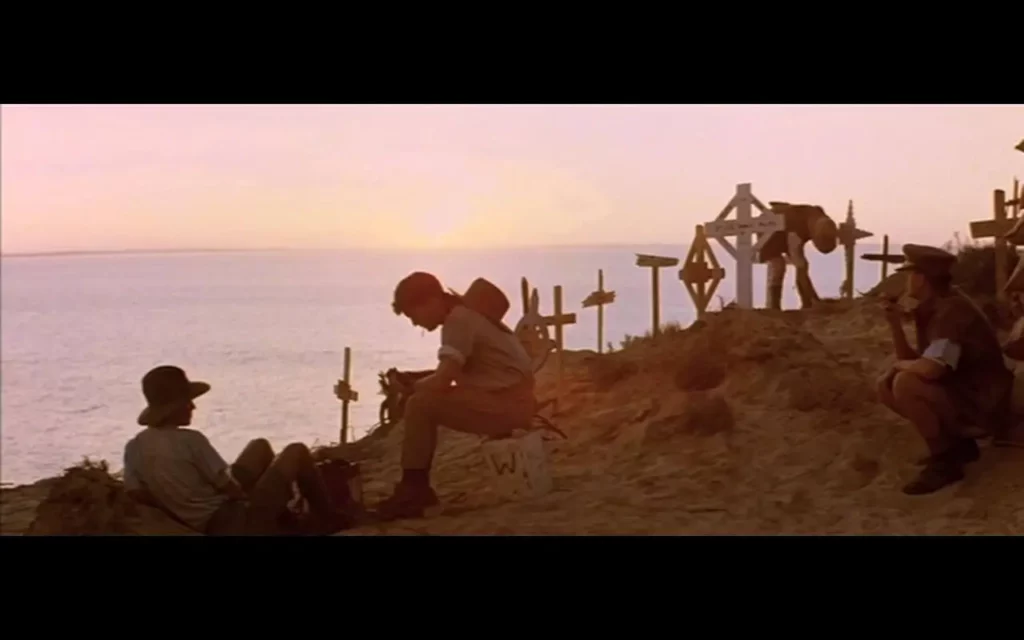
Today is ANZAC Day, marking April 25, 1915, when roughly 15,000 Australians and 1,000 New Zealanders answered the call and landed at Anzac Cove. They stepped onto the beach and stared up at the Turkish defences—armed and waiting. Few of those first wave returned. My great-great-uncle landed a few days later with the 2nd Light Horse. He never came home, and remains there even [today]; he fell at Lone Pine (or possibly Hill 60) amidst the chaos of the failed Battle of the Nek. That tragic charge is portrayed in the climax of the 1981 film Gallipoli, starring Mel Gibson and directed by Peter Weir—a brutally honest recounting of the confusion and lack of planning that led to so many deaths.
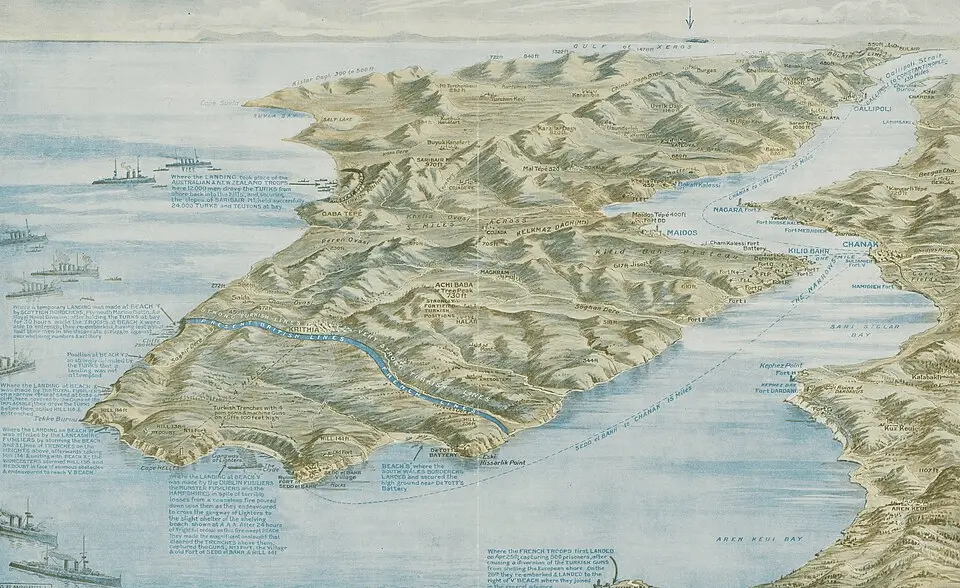
Turkish Campaign 19 February 1915 — 9 January 1916 – All Combatants
| Nationality | Total Served | Died | Wounded | Total Casualties | Notes |
|---|---|---|---|---|---|
| Australia | ~50,000 | 8,709 | 17,972 | ~26,681 | Served at ANZAC, Helles, and Suvla. 17.4% mortality. |
| New Zealand | ~14,000 | 2,721 | 4,752 | ~7,521 | Served at ANZAC and Helles. 19.4% mortality. |
| France | ~47,000 | 9,798 | 17,371 | ~27,169 | Includes colonial troops (Moroccan, Algerian, etc.). |
| Britain (UK) | ~210,000 | 34,072 | 78,520 | ~112,592 | Includes regulars, Territorials, and Royal Naval Division. 16.6% mortality. |
| Other British Empire | ~25,000 | ~2,000 | ~5,000 | ~7,000 | Includes Canadians, Irish, Indian, Newfoundland, etc. |
| Total Allied | ~310,000 | ~44,000 | ~91,000 | ~135,000 | Includes all dominions and colonies. |
| Ottoman Empire | ~315,000 | ~56,643 | ~97,007 | ~251,000 | Includes conscripts, Germans, and other allies. 79.7% casualty rate. |
| Total | ~625,000 | ~100,643 | ~250,617 | ~382,000 | Combined Allied and Ottoman figures. |
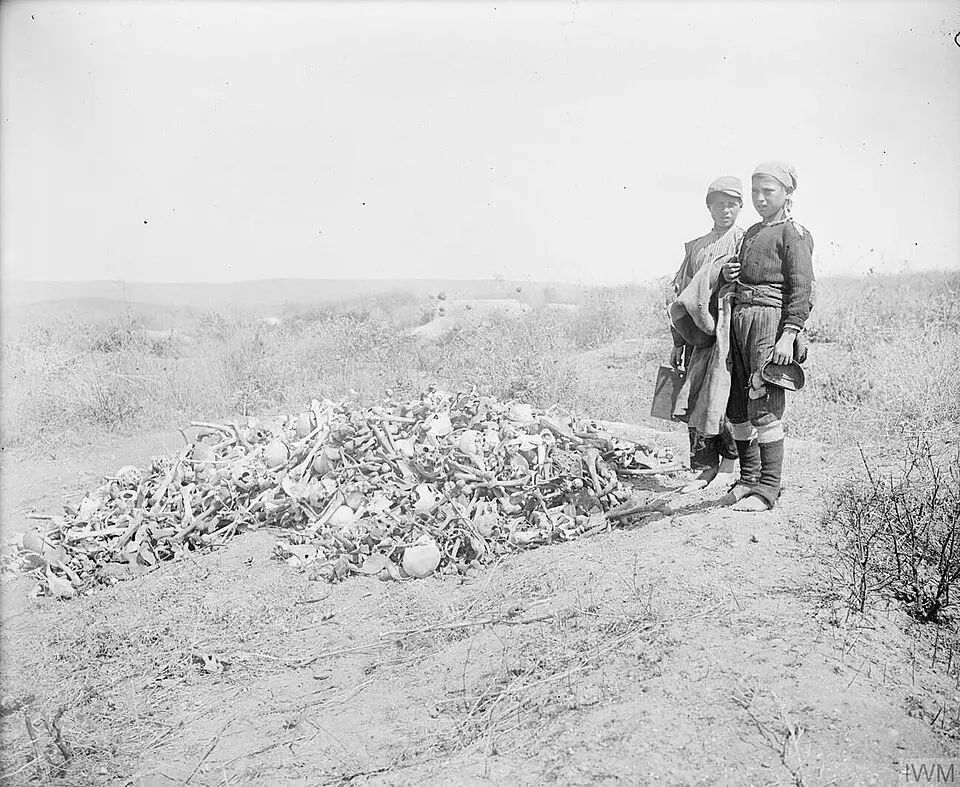
The Human Impact of this for Australia and New Zealand
The “Lost Generation”
Nearly 1 in 5 men who went to Gallipoli never returned home alive. This wasn’t just a statistic; it was a demographic wound that scarred the nation. This
Permanent Disability
Over 50% of the entire force was killed or wounded. Those who survived often returned with life-altering physical injuries or invisible psychological scars. Many could never fully reclaim their lives, their former careers, or their place in the workforce, leaving a permanent void in the lives of their families and communities.
Community Devastation
At the time, Australia and New Zealand had tiny populations. The loss of 11,430 young men represented a massive, irreplaceable drain on the nation’s future. It decimated families, crippled local economies, and stripped both countries of a generation of potential leaders, teachers, and workers. The silence left in villages and towns across the region was deafening.
The Living Legacy: From Gallipoli to the South Pacific
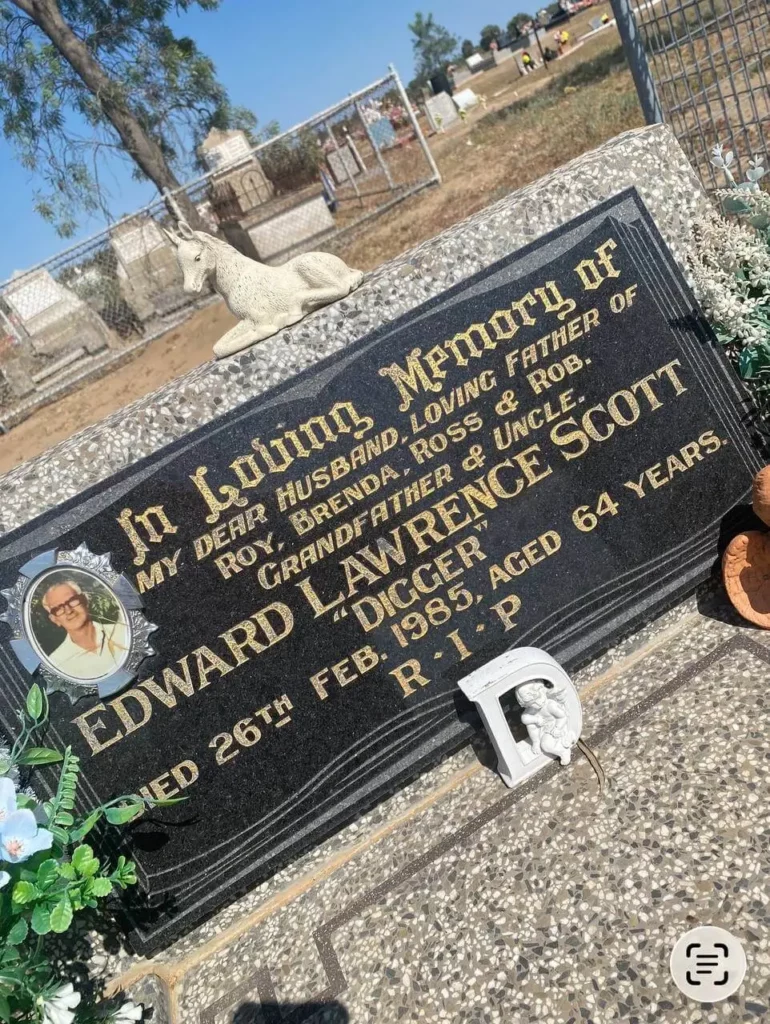
While the graves at Lone Pine and the Nek remain calm and undisturbed, the story of my family is written in the survival of one man: my maternal grandfather, Private Edward “Digger” Scott.
Unlike the thousands of young men who fell in the dust of Turkey, and wider conflicts of the ANZACs, Digger made it home. He served primarily in the South Pacific theatre, such as the Kokoda Trail, facing the brutal realities of the war against Japan. He returned with his life intact, though the war left its own marks on a generation that had to rebuild.
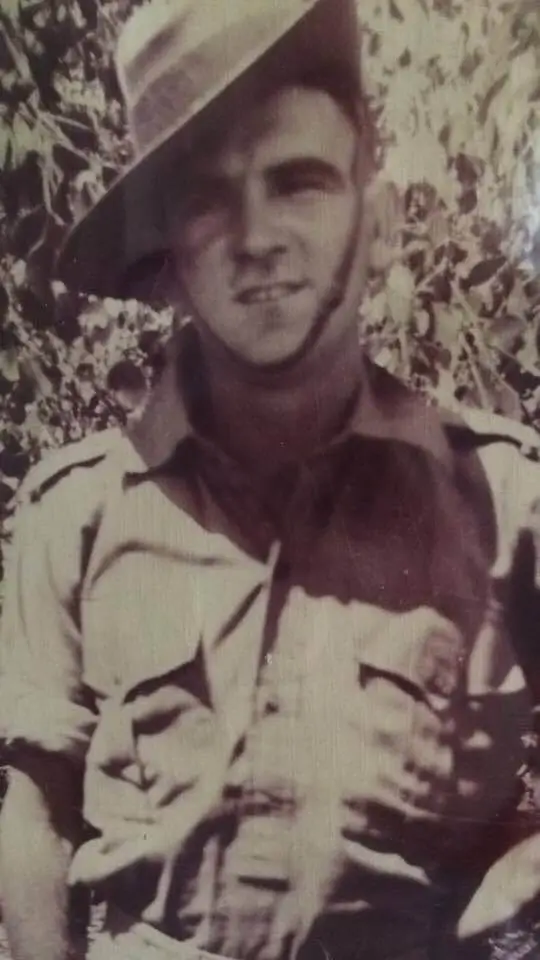
Digger—to me he was “Pop”— lived a full life, rising from the jungles of the Pacific to a peaceful old age. He passed away at 64, a man who had seen the worst of human conflict but lived to see the dawn of a new era for his family.
Today, the memory of that generation is carried forward by the next two links in the chain: my uncle, Edward Roy Scott, and my nephew, Braeden. They participated in the ANZAC Day march in Sydney, bearing the colours and medals of our ancestors’ service. They stand as living representatives of our family’s journey—from the near-certain death of the ANZACs at Gallipoli, to the hard-won survival of the Pacific War, and finally, to the present day.
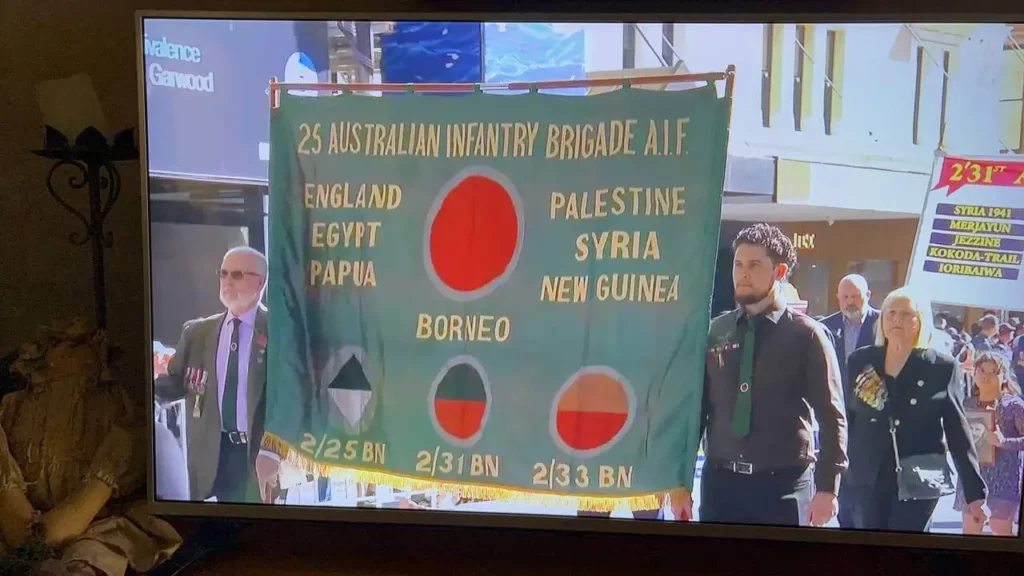
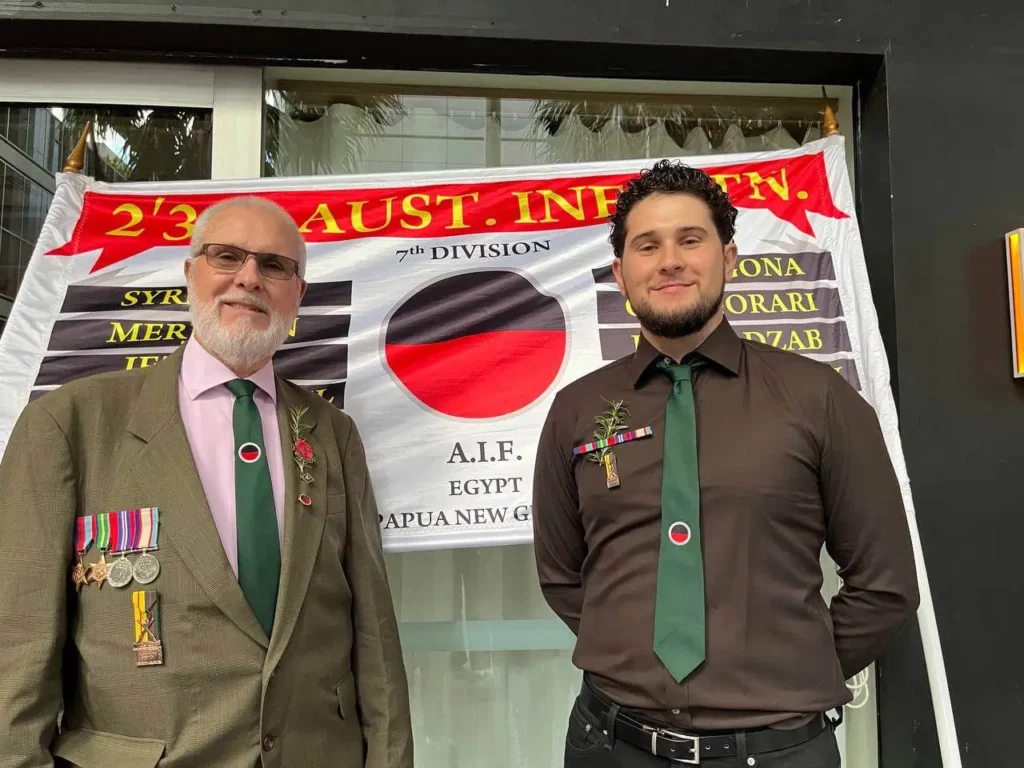
This lineage is my reminder. It is a testament to the fragility of life and the sheer luck that can keep family lines alive against impossible odds. While my great-great-uncle lies in the sands of Gallipoli, Digger’s survival allowed the story to continue, ensuring that his name, and the names of other ANZACs, would not be forgotten.
In Reflection
My time travelling the world has taught me to always dig behind the official words, and today, I did just that. Having travelled the Middle East for almost 20 years, I consider myself an expert on the complexities of that region. But Japan? I had never examined it in depth until today.
This reflection drove me to ask the hard questions: Why was my grandfather fighting the Japanese? Were they really the ‘Yellow Peril’? No. Not at all. In fact, they were attempting to liberate Southeast Asia from centuries of colonial tyranny born by the British, Dutch, and French. These are hard words, conflicting, but as we see in conflicts even to this very day, the narrative and reality are often greatly misaligned.
Beyond the “Yellow Peril”: Deconstructing the Allied Narrative
Japan’s role in World War II is another chapter of history where the official narrative—crafted largely by the victorious Allies—obscures deeper geopolitical, economic, and ideological forces. To understand Japan’s actions, we must peel back the layers of propaganda, economic warfare, and systemic pressures that shaped its decisions. Here’s a breakdown of the real forces at play, beyond the glossy propaganda of the West:
1. The Economic Strangulation of Japan
Japan was a resource-poor island nation with ambitions to industrialise and modernise.
By the 1930s, it had become heavily dependent on imports for critical resources:
- Oil: 90% of Japan’s oil came from the U.S. and the Dutch East Indies (Indonesia).
- Scrap metal and steel: The U.S. supplied 75% of Japan’s needs.
- Rubber and tin: Sourced from Southeast Asia, controlled by Western colonial powers.
The U.S. and Allied Embargo
In 1940-1941, the U.S., UK, and Netherlands imposed a crippling economic embargo on Japan, freezing its assets and cutting off oil supplies. This was not a passive act—it was a deliberate strategy to force Japan into submission or war. The U.S. demanded Japan withdraw from China and Indochina, effectively stripping it of its economic lifelines.
Key Point: Japan was given an ultimatum: Surrender your ambitions or face economic collapse. For a nation that had spent decades building its industrial and military capacity, this was an existential threat.
2. The Myth of “Unprovoked Aggression”
The West portrays Japan’s invasion of China (1937) and Southeast Asia (1941) as unprovoked aggression. However, Japan’s actions were driven by:
- Survival: Japan needed resources to fuel its economy and military. The embargo left it with 18 months of oil reserves—a death sentence for its ambitions.
- Anti-Colonialism: Japan framed its expansion as a “Greater East Asia Co-Prosperity Sphere,” positioning itself as a liberator of Asian nations from Western colonialism (e.g., British rule in Malaya, Dutch rule in Indonesia, French rule in Indochina). This resonated with many Asians who saw Japan as an alternative to Western domination.
- Preemptive Strike Logic: Japan believed war with the U.S. was inevitable. The attack on Pearl Harbor (December 7, 1941) was a preemptive strike to cripple the U.S. Pacific Fleet before it could threaten Japan’s expansion into Southeast Asia.
Key Point: Japan’s actions were not irrational—they were a calculated gamble to break free from economic strangulation and secure resources. The alternative was slow suffocation.
3. The Role of Western Hypocrisy
The West condemned Japan’s expansion while ignoring its own colonial atrocities:
- British Empire: Ruled India, Malaya, and Hong Kong with brutal efficiency.
- Dutch Empire: Exploited Indonesia’s resources for centuries.
- French Empire: Controlled Indochina (Vietnam, Laos, Cambodia) with an iron fist.
- U.S. Empire: Occupied the Philippines and Hawaii, and enforced the “Open Door Policy” in China to dominate its markets.
Japan’s invasion of China (e.g., the Nanjing Massacre) was undeniably brutal, but it was not unique in scale or savagery compared to Western colonial violence (e.g., Belgian atrocities in the Congo, British concentration camps in South Africa, or U.S. massacres in the Philippines).
Key Point: The West’s outrage over Japan’s actions was selective, driven more by self-interest than morality.
4. The Atomic Bombings: A Geopolitical Message
The U.S. dropped atomic bombs on Hiroshima (August 6, 1945) and Nagasaki (August 9, 1945) not just to end the war, but to send a message to the Soviet Union.
Declassified documents reveal that:
- Japan was already seeking surrender via the Soviet Union (neutral at the time) before the bombings.
- The U.S. rejected Japan’s conditional surrender offers (which included retaining the emperor) to justify using the bomb.
- The bombings were as much about demonstrating U.S. power to Stalin as they were about defeating Japan.
Key Point: The atomic bombings were not solely about Japan—they were the opening salvo of the Cold War.
5. The Post-War Narrative: Japan as the Villain
After the war, the U.S. and Allies crafted a narrative that:
- Erased Japan’s anti-colonial rhetoric: Japan’s claim to be liberating Asia was buried, and it was portrayed solely as an aggressor.
- Downplayed Western responsibility: The embargo and economic warfare that forced Japan’s hand were omitted from history books.
- Exaggerated Japanese atrocities: While Japan’s crimes (e.g., Unit 731, Nanjing) were real, they were weaponised to justify the U.S. occupation and rewrite Japan’s identity as a “peaceful” nation under U.S. control.
Key Point: Japan was transformed from a rival empire into a subservient U.S. ally, stripped of its military (Article 9 of its constitution) and forced into economic dependence on the U.S.
6. The Unspoken Truth: Japan Was a Threat to Western Dominance
Japan’s real crime was challenging the global economic order dominated by the U.S. and Europe.
By the 1930s, Japan had:
- Built a modern industrial economy without Western loans or control.
- Created an alternative to Western colonialism in Asia.
- Threatened U.S. and European monopolies on trade and resources.
The West could not tolerate a non-Western power rising to challenge its dominance. Japan’s expansion was a direct threat to the post-WWI global order, and the U.S. and Allies responded with economic warfare, propaganda, and ultimately, nuclear annihilation.
7. The Parallels with Germany
Japan and Germany shared key similarities:
- Both were rising powers that threatened the established order.
- Both were economically strangled (Germany via the Treaty of Versailles, Japan via the U.S. embargo).
- Both were demonized in Western propaganda to justify war.
- Both were reconstructed after the war to serve U.S. interests (Germany as a NATO bulwark, Japan as a U.S. client state).
Key Difference: Germany’s crimes (the Holocaust) were central to its post-war narrative, while Japan’s crimes (e.g., Nanjing) were amplified to justify its subjugation. The West had no equivalent of the Holocaust to use against Japan, so it invented a narrative of unprovoked aggression.
The Bottom Line
Japan’s actions in World War II were driven by:
- Economic survival: The U.S. and Allies cut off its resources, leaving it with no choice but to expand or collapse.
- Anti-colonialism: Japan positioned itself as a liberator of Asia from Western rule.
- Preemptive logic: It believed war with the U.S. was inevitable and struck first.
- Geopolitical rivalry: Japan threatened the West’s monopoly on global power.
The West’s narrative—Japan as a mindless aggressor—is a simplification designed to justify its own dominance. The reality is far more complex: Japan was a nation fighting for survival in a world where the rules were rigged against it.
The Cost of Blind Faith: A Warning for the Next Generation
The moral of my story is stark and simple: if someone tells you a story, think twice before laying down your life for them.
History is not just a record of dates and battles; it is a weaponised narrative, carefully crafted by the victors to justify their cause and erase their crimes. My great-great-uncle died believing he was fighting for a noble cause, only to be mowed down by a machine gun in a failed charge that served no strategic purpose. My grandfather survived a brutal war against a “devil” nation, only for the geopolitical reality to shift beneath his feet, revealing that the once fearsome enemy transformed into an ally and a dominant manufacturer and supplier for Australia, even as Australia’s domestic capacity dwindled. So, who really won in the end?
The stories we are told—the “Yellow Peril,” the “Glorious Charge,” the “Noble Sacrifice”—are often designed to turn human beings into statistics and to silence the questions that might reveal the true cost of empire. We are taught to march without asking why we are marching, to die without asking for whom we are dying.
But the truth is far more complex. The young men who fell at Gallipoli were not just heroes; they were victims of a catastrophic failure of leadership. The young men who fought in the Pacific were not just defenders of freedom; they were pawns in a global chess game of resources and ideology.
So, when you hear the story of the hero, ask who wrote it. When you hear the tale of the villain, ask who feared them. And when you are asked to give your life for a cause, remember that the greatest tragedy is not death itself, but dying for a lie. Think twice. Dig deeper. Because the only thing more dangerous than a soldier who asks questions is a soldier who never does.
Further Reading (Beyond Western Narratives)
- “The Origins of the Second World War in Asia and the Pacific” by Akira Iriye
- “Japan’s Imperial Conspiracy” by David Bergamini
- “The Pacific War: 1931-1945” by Saburo Ienaga
- “The Tokyo War Crimes Trial: The Pursuit of Justice in the Wake of World War II” by Yuma Totani
Jeremiah
Zug, Switzerland
About the Author
Jeremiah Josey is Chairman of MECi Group, specialising in transformative energy infrastructure and advanced nuclear solutions. With a focus on thorium-based technologies, he delivers large-scale, high-value projects across the Middle East, Asia, and Australia—structuring, financing, and executing complex, multi-billion-dollar ventures that redefine the energy landscape.
Leave a Reply
You must be logged in to post a comment.