
King Mohammed VI Invites Thorium Network President Jeremiah Josey to Present Bold Plan: Replace USD 8B Annual Fossil Fuel Imports with Nuclear Hydrogen by 2035
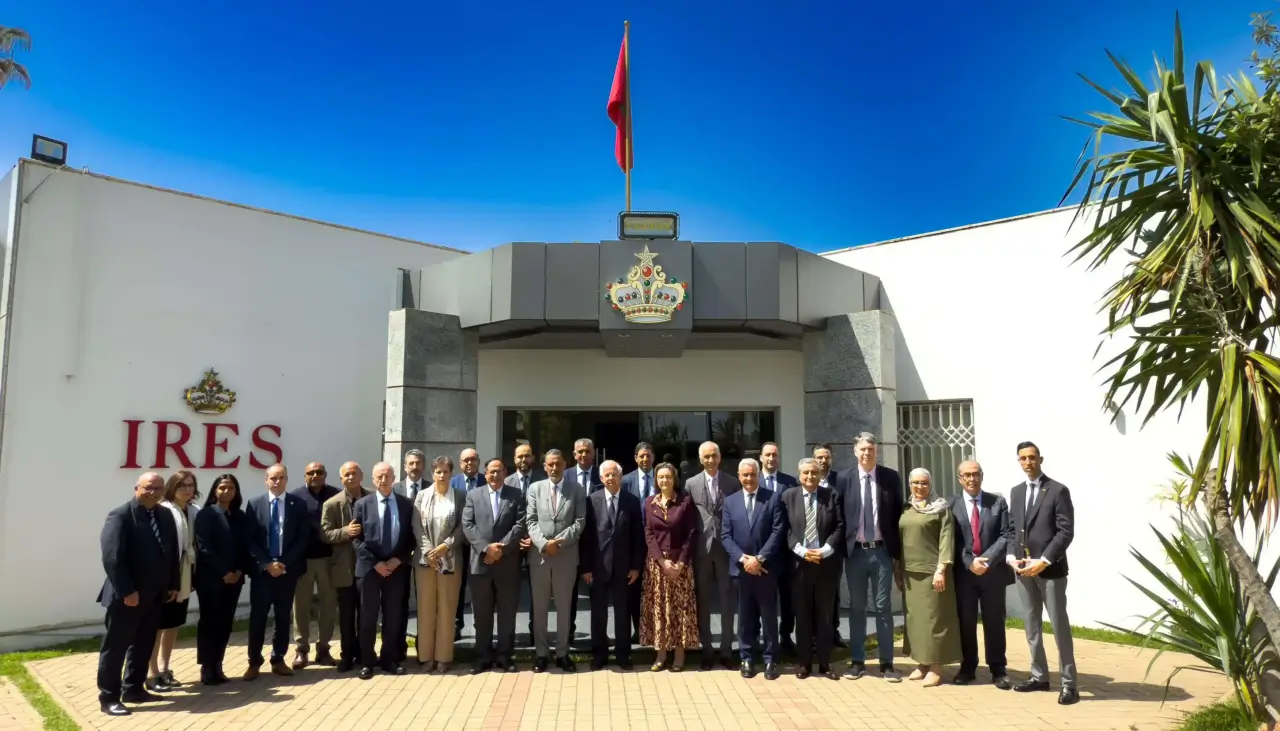
In April 2025, Jeremiah Josey, President of The Thorium Network, received an invitation from the Institut Royal des Études Stratégiques (IRES) on behalf of His Majesty King Mohammed VI to present a transformative vision for North Africa’s energy future. At the international conference “The Future of Nuclear Power in the World and in Morocco: Challenges of Integration into the National Energy Strategy,” Mr. Josey unveiled a bold, evidence-based road-map for how Morocco can leverage its vast nuclear fuel reserves to achieve complete energy independence, economic transformation, and regional leadership in clean energy innovation.
Watch the brief introduction by Jeremiah Josey introducing Thorium to Morocco
The core message was revolutionary yet grounded in geological fact: Morocco sits atop 30,000 tonnes of Thorium and 7 million tonnes of uranium — reserves that could power the nation for thousands of years. Rather than continuing to import USD 8 billion worth of fossil fuels annually, Morocco can harness these domestic resources through Liquid Fission technology, a safer, cheaper, and more sustainable form of nuclear power that eliminates long-term radioactive waste, operates without water cooling, and produces the high-temperature heat necessary for green hydrogen production, industrial processes, and medical isotope manufacturing.
“Morocco doesn’t need to import energy. It holds the key to its own energy sovereignty — in its soil. The question is not whether thorium can power Morocco’s future. The question is how quickly Morocco can seize this opportunity.”
Who Was There: Global Nuclear Leaders Align on Morocco’s Energy Future
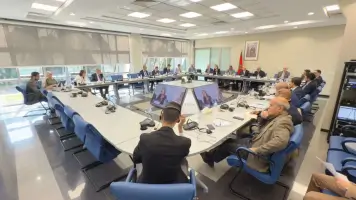
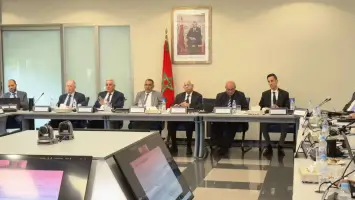
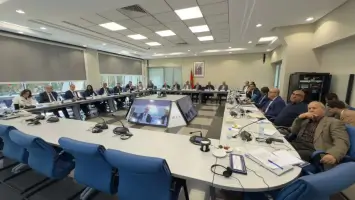
The April 24–25, 2025 conference at Morocco’s Institut Royal des Études Stratégiques brought together an unprecedented assembly of international nuclear authorities, world-leading energy companies, and Morocco’s entire government energy sector. This convergence of institutional power signals a historic moment: the alignment of global nuclear expertise with Morocco’s strategic commitment to energy independence through thorium, liquid fission technology, and green hydrogen production.
International Nuclear Authority & World’s Largest Nuclear Operator
The International Atomic Energy Agency (IAEA) — the UN’s nuclear authority — sent senior leadership including Ms. Aline DES CLOIZEAUX, Director of the Nuclear Power Division, and Ms. Molly-Kate GAVELLO, Nuclear Project Officer. Their presence validates Morocco’s nuclear strategy at the highest international level and signals IAEA support for Morocco’s energy transition pathway.
EDF (Électricité de France) — the world’s largest nuclear operator and France’s energy giant — was represented by Mr. Laurent FABRE, Head of Business Development for Africa. EDF’s participation demonstrates confidence in Morocco’s nuclear potential and positions the nation as a strategic partner for Europe’s clean energy future. France’s proven model of 75% nuclear electricity provides the blueprint for Morocco’s transformation.
Advanced Nuclear Technology & Innovation Leadership
Newcleo — a leading developer of next-generation Small Modular Reactors (SMRs) and liquid fission technology — sent Mr. Angelo BEATI, Director of Global Innovation and Special R&D Projects. Newcleo’s presence represents the cutting edge of nuclear innovation: Gen-IV reactors that operate at 750°C, require no water cooling, and produce zero long-term waste.
French Government Strategic Partnership
France’s Atomic Energy Commission (CEA) — the nation’s nuclear authority — was represented by Mr. Frank CARRÉ, Former Director and current adviser to the Director of Energy, and Mr. Jacques PENNEROUX, Expert in Radiation Protection and Risk Management. France’s direct government participation signals bilateral nuclear cooperation and technology transfer commitment to Morocco.
Complete Moroccan Government Energy Sector Alignment
Every major Moroccan energy institution was present, demonstrating unprecedented government alignment:
- ONEE (National Office of Electricity) — Morocco’s primary energy utility
- Ministry of Energy Transition and Sustainable Development — Government energy policy authority
- Masen (Moroccan Agency for Sustainable Energy) — Renewable and sustainable energy strategy
- CNESTEN (National Center for Nuclear Energy, Sciences, and Techniques) — Nuclear research and development
- Moroccan Agency for Nuclear and Radiological Safety and Security — Nuclear regulatory authority
- IRESEN (Research Institute for Solar Energy and New Energies) — Renewable energy research
Academic & International Expert Network
MINES Paris – PSL Research University, Hassan II Academy of Sciences and Technology, and Women in Nuclear International provided scientific validation and professional expertise. International nuclear experts including Khammar MRABIT (former IAEA Director of Nuclear Safety) and Chirayu BATRA (Advanced Reactors Expert) presented cutting-edge research and global best practices.
What This Assembly Means
This convergence of international nuclear authority (IAEA), world’s largest nuclear operator (EDF), advanced reactor technology innovators (Newcleo), French government partnership (CEA), and complete Moroccan government alignment signals that Morocco’s nuclear energy transition is not aspirational — it is strategically committed, internationally validated, and technologically ready for deployment.
The presence of these organisations represents billions in combined nuclear expertise, decades of operational experience, and cutting-edge innovation. Morocco is not entering nuclear energy as an experiment — it is joining a global community of proven nuclear leaders committed to decarbonisation, energy independence, and economic transformation.
Immediate Action Catalyst
The presentation by Mr. Josey catalysed immediate action at the event:
- A Memorandum of Understanding was reached with a global leader in Small Modular Fission (SMF) technology (under NDA),
- A member of the Moroccan senate agreed to support,
- Plans where laid out for 200 MW industrial mining and processing centre powered by Fission energy. This isn’t theoretical — it’s happening.
You can read the full presentation here:
Why Thorium? The Strategic Case for Advanced Nuclear Energy in Morocco
Thorium-based Liquid Fission technology represents a fundamental breakthrough in nuclear energy. Unlike conventional uranium reactors, Thorium systems offer Morocco a unique combination of economic, environmental, and strategic advantages:
- 90% Cost Reduction — Liquid Fission thorium costs approximately USD 10/MWh versus USD 60/MWh for conventional uranium nuclear and USD 50–60/MWh for fossil fuels
- Zero Long-Lived Radioactive Waste — Unlike uranium reactors that produce waste requiring 10,000+ years of storage, Thorium systems produce minimal residual waste with manageable half-lives
- High-Temperature Output (~750°C) — Enables direct industrial applications: hydrogen production via high-temperature electrolysis, ammonia synthesis, steel production, and desalination
- No Water Cooling Required — Critical for Morocco, a water-stressed nation; Liquid Fission operates at atmospheric pressure without competing for scarce water resources
- 100% Fuel Burnup — Achieves complete utilisation of nuclear fuel, eliminating waste and maximising energy extraction
- Blockchain-Tracked Medical Isotopes — Enables secure, transparent tracking of medical-grade isotopes for cancer therapy and diagnostics
- Supercritical CO₂ Turbines — Delivers ultra-efficient power generation with compact, modular designs suitable for distributed energy systems
- Fuel Flexibility — Can utilise Thorium, uranium, and even recycled nuclear fuel, providing strategic energy security
These advantages position Thorium not as an alternative to renewable energy, but as the essential complement that makes Morocco’s clean energy transition economically viable and technically feasible.
Morocco’s Energy Crisis: The Urgent Case for Transformation
Morocco’s current energy situation is unsustainable. The nation spends USD 8 billion annually importing fossil fuels — primarily oil, coal, and natural gas — while suffering an additional USD 1.1 billion in annual air pollution costs (approximately 1% of GDP). This represents a massive economic drain that diverts capital from education, healthcare, and infrastructure development.
Current Energy Consumption Breakdown (~1 Exajoule/Year)
- Fossil Fuels: >90%
- Transport sector: 25% (primarily liquid fuels for vehicles) — USD 6B/year in oil imports
- Electricity generation fuel input: 40% (coal at USD 1.5B/year, natural gas at USD 0.5B/year)
- Residential and other heating: ~18%
- Industrial heating and processes: ~7%
- Hydroelectric Power: ~3% (1.8 GW installed, 30% capacity factor)
- Wind Energy: ~3% (2.4 GW installed, 37% capacity factor)
- Solar Energy: ~0.6% (1.5 GW installed, 13% capacity factor)
- Biomass: <1%
- Nuclear Energy: 0% (currently non-existent in Morocco’s energy portfolio, despite massive fuel reserves)
This energy portfolio creates multiple vulnerabilities: price volatility in global oil markets, geopolitical dependence on energy suppliers, environmental degradation from coal and oil combustion, and limited economic competitiveness due to high energy costs. Morocco’s population of 37 million, with a GDP of USD 150 billion, cannot afford to remain dependent on imported fossil fuels. The nation needs a strategic pivot toward domestic energy resources.
Morocco’s Untapped Nuclear Treasure: Thorium and Uranium Reserves
Morocco possesses exceptional nuclear fuel resources that could provide energy security for millennia — yet these reserves remain largely undeveloped:
Uranium Reserves: 7 Million Tonnes
- Energy Supply Potential: Approximately 6,500 years of energy independence (without breeding or reprocessing)
- Global Context: Morocco ranks among nations with the world’s most significant uranium deposits
- Current Status: Largely unexploited; represents a strategic reserve for future energy security
Thorium Reserves: 30,000 Tonnes
- Energy Supply Potential: Approximately 1,000 years of energy independence (without breeding or reprocessing)
- Advanced Utilisation: When fully utilised in advanced Liquid Fission burners, Thorium delivers extraordinary energy density — 79,000,000 MJ/kg compared to petroleum’s 40 MJ/kg
- Strategic Value: Thorium is 3–4 times more abundant than uranium globally, making it the ideal long-term fuel for sustainable nuclear energy
To contextualise this energy wealth: Morocco’s Thorium reserves contain more usable energy than all the oil reserves in the Middle East. This is not a minor resource — it is a strategic asset comparable to oil wealth for energy-producing nations, yet with the advantage of domestic availability and zero geopolitical dependence.
Morocco’s Nuclear History: Seven Decades of Scientific Foundation
Morocco’s engagement with nuclear science and technology spans more than 70 years, establishing a foundation of expertise and institutional capacity:
- 1950s: Initial nuclear applications in medical, agricultural, and industrial sectors; establishment of nuclear research programs
- 1980s: Sidi Boulbra identified as a suitable nuclear facility site; comprehensive feasibility studies conducted by IAEA and French engineers
- 1980: Section 123 Agreement signed with the United States, establishing bilateral nuclear cooperation framework
- 2001: Renewed Section 123 Agreement with the USA, reinforcing long-term nuclear cooperation commitment
- 2003: Establishment of the Maamora Nuclear Research Centre with a 2 MWt TRIGA reactor
- 2009: TRIGA reactor becomes operational at La Maamora in Kenitra; Morocco confirms nuclear energy as part of national energy strategy
- 2015: IAEA International Nuclear Infrastructure Review (INIR) Program supports development of a 1 GW nuclear facility (representing approximately 10% of Morocco’s current grid capacity)
- 2022: New research reactor planned in partnership with Rosatom (Russia), advancing Morocco’s nuclear capability
This institutional history demonstrates that Morocco is not entering nuclear energy as a novice. The nation has decades of experience with nuclear science, established regulatory frameworks, trained personnel, and proven partnerships with international nuclear authorities. The infrastructure for nuclear expansion already exists; what is needed is strategic commitment and capital investment.
Global Energy Context: Lessons from Germany, China, and France
Germany’s Renewable Transition: A Cautionary Tale
Germany’s experience with renewable energy deployment provides critical lessons for Morocco’s energy planning. Despite investing over €1.5 trillion in renewable infrastructure, Germany has achieved:
- No Significant CO₂ Reduction — Emissions have plateaued despite massive renewable investment
- Doubled Energy Prices — Electricity costs have increased dramatically compared to nuclear-powered France
- Industrial Competitiveness Crisis — Energy-intensive industries are relocating due to high electricity costs
- Coal and Nuclear Paradox — Coal power plants are being reactivated to compensate for renewable intermittency and Germany actively buys surplus energy from nuclear neighbour France.
- Nuclear Reconsideration — Germany is now reconsidering nuclear energy as essential to its energy transition
The German experience demonstrates that renewables cannot achieve decarbonisation goals. Intermittency creates grid instability, requiring either expensive battery storage, fossil fuel backup, or nuclear baseload power. Morocco must learn from Germany’s costly mistakes and design an integrated energy system combining nuclear baseload with renewable generation.
China and Russia: The Nuclear Construction Advantage
China and Russia have demonstrated the economic and technical advantages of streamlined nuclear development:
- Construction Cost: China builds nuclear plants at approximately USD 2 million per installed MW, compared to USD 5–10 million/MW in Western nations
- Construction Timeline: Chinese and Russian projects are completed in 5–7 years, versus 10–15+ years for Western projects
- Regulatory Efficiency: Streamlined regulatory processes avoid the consultancy overhead that inflates Western nuclear costs
- Technology Transfer: Both nations offer proven reactor designs and fuel cycle technology to partner nations
Morocco’s strategic partnerships with China and Russia for nuclear deployment offer significant cost advantages unavailable through Western suppliers, making large-scale nuclear expansion economically feasible.
France: The Nuclear Success Model
France demonstrates that high nuclear penetration is achievable, economically viable, and compatible with industrial competitiveness:
- Nuclear Energy Share: 75% of electricity generation
- Energy Security: Achieved through domestic nuclear capacity; minimal fossil fuel dependence
- Decarbonisation: Lowest carbon electricity in Europe
- Energy Prices: Competitive electricity prices despite high labour costs
- Industrial Competitiveness: Maintains energy-intensive industries (steel, chemicals, automotive)
France’s model proves that nuclear energy enables both decarbonisation and economic competitiveness — a pathway Morocco can replicate.
Morocco’s Renewable Energy Infrastructure: Ouarzazate Solar Power Station Case Study
Morocco’s most significant renewable energy investment — the Ouarzazate Solar Power Station (Noor نور) — provides valuable lessons about the economics and limitations of solar energy in North Africa:
Project Specifications
- Nameplate Capacity: 580 MW installed capacity
- Equivalent Firm Supply: 133 MW (23% capacity factor)
- Total CAPEX: USD 9 billion USD
- Cost per Useful Megawatt: USD 68 million per MW
Economic Analysis: Why Solar Costs More Than Nuclear
The dramatic difference between nameplate capacity (580 MW) and firm supply (133 MW) illustrates the fundamental intermittency challenge of solar technology. The 23% capacity factor reflects Morocco’s solar resource availability and operational realities. When compared to nuclear alternatives, the cost differential is striking:
- Ouarzazate Solar: USD 68 million per useful-MW
- CAP1000 (China): ~USD 2 million per MW (90% capacity factor)
- VVER1200 (Russia): ~USD 5.5 million per MW (90% capacity factor)
Over a 100-year lifecycle, this cost differential becomes catastrophic. Solar panels require 100% replacement every 20–25 years; wind turbines need entire overhauls every 20 years; battery storage systems require replacement every 10–15 years. Nuclear plants operate for 60–80+ years with minimal equipment replacement. The Ouarzazate project’s total lifetime cost approaches USD 160 billion, while an equivalent nuclear facility would cost USD 78–105 billion — a USD 55–82 billion savings over the asset’s lifespan.
However, the Ouarzazate project did provide valuable experience with molten salt thermal storage technology, which has direct applications for advanced Liquid Fission machines operating at 750°C.
Morocco’s Hydrogen Economy: USD 32.5 Billion in Approved Projects
Morocco has already committed to substantial green hydrogen and ammonia production projects, positioning itself as a regional clean energy exporter. These projects demonstrate that Morocco’s energy transition is not theoretical — it is already underway:
Major Projects Under Development
Dahamco Ammonia Project (Dakhla)
- Investment: USD 25 billion USD
- Location: Dakhla, Morocco (Western Sahara region)
- Production Capacity: 1 million tonnes of ammonia per year
- Timeline: Operational by 2031
- Market Focus: Export-oriented (primarily European markets)
- Land Requirements: Up to 30,000 hectares for renewables and electrolysis infrastructure
OCP Group Green Ammonia Facility (Tarfaya)
- Investment: USD 7 billion USD
- Location: Near Tarfaya, Morocco
- Phase 1 Production: 1 million tonnes per year by 2027
- Phase 2 Production: 3 million tonnes per year by 2032
- Land Requirements: Up to 30,000 hectares for renewables and electrolysis infrastructure
Total Approved Investment: USD 32.5 Billion USD
These projects represent Morocco’s commitment to becoming a global clean energy exporter. However, they also highlight a critical challenge: renewable-powered electrolysis is intermittent, matching renewable generation patterns. Nuclear-powered electrolysis could operate continuously, enabling 24/7 hydrogen production and reducing electrolyzer capital costs per unit of hydrogen produced.
Strategic International Partnerships
Morocco’s hydrogen strategy involves partnerships with major international players:
- UAE: TAQA (Abu Dhabi National Oil Company) — capital and expertise
- China: UEG (United Energy Group) and China Three Gorges — technology and construction
- European Union: TotalEnergies, Engie, Acwa Power — technology transfer and export market access
- Additional Partners: Multiple additional projects in development with international strategic partners
Hydrogen Production Technologies: Cost Analysis and Strategic Options
Morocco’s hydrogen economy requires understanding the diverse production methods, their costs, and their strategic advantages:
Hydrogen Production Methods and Cost Comparison
| Production Method | Cost Range (USD/kg) | Technology Status | Strategic Notes |
|---|---|---|---|
| Steam Methane Reforming | 0.5 – 3.5 | Mature | Lowest cost; depends on natural gas prices; produces “grey” or “blue” hydrogen with carbon capture |
| Alkaline Electrolysis | 2.0 – 6.0 | Mature | Proven technology; cost depends on electricity prices and electrolyzer capital costs |
| Proton Exchange Membrane (PEM) | 2.0 – 6.0 | Mature | Flexible operation; higher capital costs; suitable for variable renewable power |
| Solid Oxide Electrolysis (High-Temperature) | 2.0 – 6.0 | Emerging | Potential for waste heat integration; improves efficiency with high-temperature nuclear heat |
| Green Hydrogen (Renewables-Based Electrolysis) | 3.0 – 7.0 | Mature | Depends on renewable electricity cost, electrolyzer CAPEX, and capacity factor; intermittent production |
| High-Temperature Electrolysis (Nuclear-Powered) | >4 | Emerging | Potential for cost reduction to ~USD 2/kg by 2026 (DOE target); requires stable, continuous heat source |
| Thermochemical (Solar/Nuclear) | 3.5 | Emerging | Not yet commercial; requires high-temperature heat source |
| Methane Pyrolysis | 1.0 | Laboratory | Emerging breakthrough; produces high-value graphene byproduct; requires stable continuous power |
Strategic Hydrogen Production Pathway for Morocco
Near-Term (2025–2030): Green hydrogen via renewable-powered electrolysis (USD 3–7/kg)
Medium-Term (2030–2035): Nuclear-powered high-temperature electrolysis (USD 2–4/kg) combined with renewable integration
Long-Term (2035+): Methane pyrolysis with nuclear heat (USD 1/kg) + graphene byproduct production
Strategic Synergies: Why Nuclear and Renewables Are Complementary, Not Competitive
The most critical insight from Jeremiah Josey’s presentation is that nuclear energy and renewable sources are not competitors but essential complements that create strategic synergies:
How Nuclear Complements Renewables
- Baseload Power Supply: Nuclear provides consistent, 24/7 power generation independent of weather conditions, enabling grid stability
- Grid Stability: Stable nuclear output balances intermittent renewable generation, reducing need for expensive battery storage
- Hydrogen Production: Continuous nuclear power enables consistent hydrogen production via electrolysis, eliminating intermittency limitations
- Capacity Factor Advantage: Nuclear plants operate at 90%+ capacity factors, compared to solar (13–23%) and wind (30–40%)
- Industrial Heat Supply: High-temperature nuclear output (750°C) powers industrial processes requiring continuous heat
Green and Pink Hydrogen Production
- Green Hydrogen: Produced via electrolysis powered by renewable energy sources (solar, wind)
- Pink Hydrogen: Produced via electrolysis powered by nuclear energy
Nuclear-powered hydrogen production offers distinct advantages:
- Continuous Production: Renewable-powered electrolysis is intermittent; nuclear-powered electrolysis operates 24/7
- Capital Efficiency: Continuous production reduces electrolyzer capital costs per unit of hydrogen produced
- Export Reliability: Consistent hydrogen supply enables reliable export contracts with European customers
- Industrial Competitiveness: Stable hydrogen supply supports industrial processes requiring continuous feedstock
Methane Pyrolysis: Emerging Technology with Nuclear Synergy
Methane pyrolysis represents a breakthrough hydrogen production technology with exceptional potential:
- Hydrogen Production Cost: Approximately USD 1 per kilogram
- Byproduct: High-value graphene (valuable for industrial applications, electronics, composites)
- Energy Requirements: Requires stable, continuous electricity supply (ideal for nuclear power)
- Technology Status: Advanced laboratory-scale verification (IPRI.Tech); approaching commercial readiness
The combination of nuclear power with methane pyrolysis could produce hydrogen at approximately USD 1/kg while generating valuable graphene byproducts — creating a profitable, sustainable hydrogen economy.
High-Temperature Electrolysis: Leveraging Nuclear Heat
High-temperature electrolysis (HTE) represents an advanced hydrogen production method that leverages nuclear heat:
- Operational Temperature: 750°C (utilising waste heat from liquid fission reactors)
- Efficiency Advantage: Significantly improves electrolyzer efficiency compared to room-temperature electrolysis
- Electrical Energy Reduction: Reduces electrical energy requirements for hydrogen production by 20–30%
- Cost Reduction: Department of Energy targets approximately USD 2/kg by 2026
- Integration Advantage: Liquid fission reactors operating at ~750°C provide ideal heat sources for HTE
Liquid Fission Technology: The Advanced Nuclear Solution for Morocco
Energy Density Hierarchy: Why Thorium Matters
Understanding energy density is critical to appreciating the strategic value of advanced nuclear fuels:
- Ammonia: 20 MJ/kg
- Petroleum Products: 40 MJ/kg
- Hydrogen: 120 MJ/kg
- Uranium (natural, conventional solid-fuel reactors, partial burn-up): 442,000 MJ/kg
- Thorium (fully utilised in advanced liquid fission burners): 79,000,000 MJ/kg
The energy density of thorium, when fully utilised in advanced Liquid Fission burners, is approximately 179,000 times greater than petroleum products and 658,000 times greater than ammonia. This extraordinary energy density explains why Thorium reserves of only 30,000 tonnes can power Morocco for 1,000 years.
Liquid Fission Technology: Eutectic Salt-Based Reactors
Liquid fission reactors using eutectic salt fuel represent an advanced nuclear technology with significant advantages over conventional solid-fuel reactors:
Operational Advantages
- No Water Required: Eliminates water cooling requirements, enabling deployment in arid regions like Morocco
- Low Pressure Operation: Operates at atmospheric pressure, reducing containment requirements and safety risks
- 100% Fuel Burnup: Achieves complete utilisation of nuclear fuel, eliminating waste and maximising energy extraction
- Zero Long-Term Waste: Eliminates long-term radioactive waste storage requirements; residual waste has manageable half-lives
- Fuel Flexibility: Can utilize thorium, uranium, and recycled nuclear fuel, providing strategic energy security
- High Operating Temperature: Operates at approximately 750°C, enabling high-temperature applications (hydrogen production, industrial heat, desalination)
- Passive Safety: Inherent safety characteristics reduce accident risk compared to conventional reactors
Strategic Advantages for Morocco
The elimination of water cooling requirements is particularly significant for Morocco, a water-stressed nation in North Africa. Liquid fission technology enables nuclear power generation without competing for scarce water resources — a critical advantage for a semi-arid country facing increasing water scarcity due to climate change.
Comparative Cost Analysis: Levelized Cost of Electricity (LCOE)
| Technology | Cost (USD/MWh) | Capacity Factor | Fuel Cost |
|---|---|---|---|
| Liquid Fission Thorium | 10 | 90%+ | Minimal (domestic Thorium) |
| Solar | 20 | 13–23% | Zero (but requires replacement every 25–30 years) |
| Wind | 20 | 30–40% | Zero (but requires major overhauls every 20 years) |
| Coal | 50 | 70% | Ongoing (imported) |
| Natural Gas | 60 | 50% | Ongoing (imported) |
| Solid Fission Uranium | 60 | 90% | Ongoing (imported fuel) |
This analysis demonstrates that liquid fission Thorium technology offers the lowest cost of electricity generation at approximately USD 10/MWh, compared to USD 20/MWh for solar and wind, and USD 50–60/MWh for conventional nuclear and fossil fuels. Over a 60–80 year operational lifespan, this cost advantage translates to hundreds of billions in economic savings.
Global Thorium Research Initiative: Morocco Joins the Vanguard?
Morocco’s potential with Thorium technology would align it with a global research trend. Major research institutions worldwide are investigating Thorium fuel cycles, positioning thorium as the future of sustainable nuclear energy:
- China: Shanghai Institute of Applied Physics (SINAP) — leading thorium research
- Russia: Kurchatov Institute — advanced reactor design
- France: Grenoble Institute of Technology — fuel cycle research
- International: European Organization for Nuclear Research (CERN)
- India: Indian Atomic Energy Commission (DAE) — Thorium fuel cycle development
- USA: Oak Ridge National Laboratory (ORNL), Idaho National Laboratory (INL), Texas A&M University — Thorium research centers
- Canada: Canadian Nuclear Laboratories (CNL)
- Japan: Japan Atomic Energy Agency (JAEA)
- Netherlands: Netherlands Organisation for Applied Scientific Research (TNO)
- Denmark: Denmark Technical University (DTU)
- Czech Republic: Nuclear Research Institute (NRI)
- Brazil: Brazilian Nuclear Energy Commission (CNEN)
- Germany: German Research Center for Geosciences (GFZ)
This global research effort demonstrates the international recognition of Thorium’s potential as a long-term nuclear fuel solution. Morocco, by establishing a Thorium Research Centre and deploying liquid fission technology, would position itself at the forefront of this global energy revolution.
Building Africa’s Nuclear Innovation Hub: The Thorium Research Centre (TRC)
Morocco’s vast reserves of 30,000 tonnes of thorium — sitting largely untapped in its soil — represent far more than a commodity: they represent a pathway to energy independence, economic transformation, and regional leadership. The proposed Thorium Research Centre (TRC), with an estimated CHF 100 million investment and a 5-year development timeline, transforms Morocco from a resource-rich nation into a global hub for advanced nuclear innovation.
TRC Organisational Structure and Research Divisions
Housed in state-of-the-art facilities and powered by Liquid Fission Thorium technology, the TRC will operate five specialized divisions:
1. Power Generation Division
- Development of supercritical CO₂ turbines for ultra-efficient electricity generation
- Optimisation of liquid fission reactor designs for modular deployment
- Integration with grid management systems for distributed energy
- Testing and validation of reactor performance at commercial scale
2. Industrial Heat Applications Division
- Hydrogen production via high-temperature electrolysis (HTE) at 750°C
- Ammonia synthesis for fertilizer and fuel applications
- Desalination for water security in arid regions
- Steel and cement production using nuclear heat
- Process heat for chemical and petrochemical industries
3. Medical Isotope Manufacturing Division
- Production of medical isotopes for cancer diagnostics and therapy (Mo-99, Lu-177, I-131)
- Blockchain-secured isotope tracking for patient safety and regulatory compliance
- Development of Targeted Alpha Therapy (TAT) isotopes for advanced cancer treatment
- Collaboration with global medical institutions for clinical trials and distribution
- Export of medical isotopes to African and European markets
4. Environmental Research & Sustainability Division
- Life-cycle analysis of Thorium fuel cycles versus uranium and fossil fuels
- Environmental impact assessment of liquid fission technology
- Waste management strategies for minimal environmental footprint
- Water conservation studies for arid-region deployment
- Carbon footprint reduction through nuclear energy transition
5. Fuel Security & Blockchain Tracking Division
- Development of secure Thorium fuel supply chains from mining to reactor
- Blockchain-based tracking of nuclear materials for non-proliferation compliance
- Smart contract integration for fuel procurement and logistics
- Real-time monitoring of fuel burnup and waste generation
- International regulatory compliance and IAEA coordination
Economic Impact and Job Creation
Beyond research, the TRC promises transformative economic impact:
- High-Skilled Job Creation: 500+ permanent positions in nuclear engineering, materials science, medical physics, and industrial applications
- 90% Cost Savings: Liquid Fission Thorium systems cost 90% less than conventional uranium-based nuclear
- Export Opportunities: Medical isotopes, hydrogen, ammonia, and technical expertise for African and European markets
- Technology Transfer: Training programs for African nations seeking nuclear energy independence
- Supply Chain Development: Local manufacturing of reactor components, turbines, and specialised equipment
Strategic Partnerships and International Collaboration
The TRC’s success depends on strategic partnerships with global institutions such as:
- Shanghai Institute of Applied Physics (SINAP), China: Thorium fuel cycle expertise and reactor design collaboration
- Kurchatov Institute, Russia: Advanced reactor engineering and materials science
- Oak Ridge National Laboratory (ORNL), USA: Thorium research and medical isotope production
- International Atomic Energy Agency (IAEA): Regulatory framework and safety standards
- European Nuclear Research Organizations: Technology transfer and hydrogen production research
You can read the presentation for the Thorium Research Centre here:
Morocco’s Path Forward: Vision for 2035 and Beyond
Phase 1: Foundation and Deployment (2025–2028)
- Establish Thorium Research Centre: Complete construction and operational readiness of TRC facilities
- Launch 200 MW Mining Centre: Eg. UAE-funded Thorium mining and processing facility begins operations
- Secure International Partnerships: Finalize agreements with China, Russia, and IAEA for technology transfer
- Regulatory Framework: Develop Morocco’s nuclear regulatory framework aligned with international standards
- Workforce Development: Train 500+ nuclear engineers, technicians, and specialists
Phase 2: Coal Replacement (2028–2033)
- Deploy 5 GW Nuclear Capacity: Replace coal-fired generation with Liquid Fission Thorium reactors
- Eliminate Coal Imports: Save USD 1.5 billion annually previously spent on coal
- Grid Integration: Integrate nuclear baseload with existing wind and solar capacity
- Industrial Heat Supply: Begin supplying high-temperature heat for hydrogen and ammonia production
- Medical Isotope Export: Establish Morocco as regional supplier of medical isotopes
Phase 3: Hydrogen Economy Acceleration (2033–2035)
- 30 GW Hydrogen Capacity: Deploy nuclear-powered electrolysis for 4 million tonnes/year green hydrogen
- Ammonia Production: Reach 24 million tonnes/year combined with Dahamco and OCP projects
- Export Infrastructure: Complete hydrogen pipelines and export terminals to Europe
- Industrial Competitiveness: Enable energy-intensive industries (steel, chemicals, fertilizers)
- Desalination Deployment: Supply nuclear-powered desalination for water security
Phase 4: Regional Leadership (2035+)
- Africa’s Nuclear Hub: Position Morocco as continent’s center for nuclear innovation and technology transfer
- Export-Oriented Economy: Export hydrogen, ammonia, medical isotopes, and technical expertise
- Energy Independence: Achieve complete energy independence from fossil fuel imports
- Methane Pyrolysis Deployment: Commercialise USD 1/kg hydrogen production with graphene byproducts
- Regional Partnerships: Support nuclear energy development in neighboring African nations
Economic Transformation: From Fossil Fuel Importer to Clean Energy Exporter
Current State (2025): Fossil Fuel Dependence
- Annual Fossil Fuel Imports: USD 8 billion (oil USD 6B, coal USD 1.5B, gas USD 0.5B)
- Air Pollution Costs: USD 1.1 billion annually
- Total Economic Burden: USD 9.1 billion per year
- Energy Security Risk: 100% dependent on imported fossil fuels
- Industrial Competitiveness: High energy costs limit manufacturing and processing industries
Projected State (2035): Clean Energy Leadership
- Fossil Fuel Imports: Reduced to near-zero (oil for transport only)
- Annual Savings: USD 8 billion from eliminated fossil fuel imports
- Air Pollution Reduction: Elimination of coal and significant reduction in oil combustion
- Hydrogen/Ammonia Exports: USD 30+ billion annually from clean energy exports
- Energy Independence: 100% domestic energy production from nuclear and renewables
- Industrial Competitiveness: Lowest-cost electricity in Africa (USD 10/MWh)
- Employment: 50,000+ jobs in nuclear, hydrogen, and clean energy sectors
Net Economic Impact by 2035
Cumulative Economic Benefit (2025–2035): Approximately USD 150–200 billion
- Fossil Fuel Import Savings: USD 80 billion (10 years × USD 8B/year)
- Air Pollution Cost Reduction: USD 11 billion (elimination of coal, reduction in oil)
- Hydrogen/Ammonia Export Revenue: USD 150+ billion (cumulative export value)
- Industrial Development: USD 30+ billion in new manufacturing and processing capacity
- Job Creation Value: USD 20+ billion in wages and economic activity
- Technology Export: USD 5–10 billion in technical expertise and training services
Addressing Critical Challenges and Risk Mitigation
Challenge 1: Public Acceptance and Nuclear Safety Perception
Risk: Public concern about nuclear safety, waste disposal, and accident risk
Mitigation Strategy:
- Transparent communication about Liquid Fission safety advantages (atmospheric pressure, passive safety)
- Public education campaigns highlighting France’s 75% nuclear success and safety record
- Establishment of independent nuclear safety authority aligned with IAEA standards
- Community engagement programs and local employment opportunities
- Waste management transparency: demonstrate zero long-term waste from Thorium systems
Challenge 2: Capital Investment and Financing
Risk: USD 70 billion CAPEX requirement for 35 GW capacity may strain national finances
Mitigation Strategy:
- Phased deployment: 5 GW coal replacement (2028–2033) before hydrogen expansion (2033–2035)
- International financing: World Bank, African Development Bank, bilateral partnerships with China/Russia
- Public-private partnerships: Private sector investment in hydrogen and ammonia production
- Revenue recycling: Use fossil fuel import savings (USD 8B/year) to fund nuclear expansion
- Export revenue: Hydrogen and ammonia sales generate revenue for reinvestment
Challenge 3: Technology Maturity and Commercialsation
Risk: Liquid fission Thorium technology is not yet commercially deployed at scale
Mitigation Strategy:
- Partner with proven reactor developers (China CAP1000, Russia VVER, international SMR leaders)
- Thorium Research Centre focuses on demonstration projects and technology validation
- Phased approach: Begin with proven conventional reactors, transition to liquid fission as technology matures
- International collaboration with SINAP, Kurchatov, ORNL for technology transfer
- Regulatory pathway development with IAEA for liquid fission deployment
Challenge 4: Hydrogen Infrastructure and Export Markets
Risk: Hydrogen infrastructure (storage, pipelines, export terminals) requires USD 5B+ investment; European market adoption uncertain
Mitigation Strategy:
- EU hydrogen strategy alignment: Morocco positions as key supplier for European green hydrogen targets
- Long-term export contracts: Secure commitments from European industrial and energy companies
- Infrastructure partnerships: EU firms (TotalEnergies, Engie) co-invest in pipeline and terminal development
- Domestic hydrogen demand: Develop ammonia, methanol, and synthetic fuel industries for domestic use
- Regional markets: Export to North Africa, Middle East, and sub-Saharan Africa
Challenge 5: Water Scarcity and Environmental Impact
Risk: Morocco faces severe water scarcity; nuclear-powered desalination and industrial processes require water management
Mitigation Strategy:
- Liquid Fission advantage: No water cooling required (atmospheric pressure operation)
- Desalination deployment: Use nuclear heat for large-scale seawater desalination
- Water recycling: Industrial processes designed for water conservation and recycling
- Environmental monitoring: Continuous assessment of groundwater and coastal impacts
- Climate resilience: Nuclear energy reduces vulnerability to hydroelectric variability
Positive Outlook: If Renewables and Hydrogen Infrastructure Mature
Morocco’s energy transformation strategy depends on several critical factors achieving maturity:
Renewable Technology Maturation
- Cost Reduction: Continued reduction in solar and wind costs enhances economic viability
- Reliability Improvement: Enhanced grid integration and storage solutions reduce intermittency challenges
- Supply Chain Stability: Stable supply of renewable energy components supports deployment
- Capacity Factor Improvement: Technological advances increase effective capacity factors
Hydrogen Infrastructure Development
- Storage Technology: Advancement in hydrogen storage solutions (salt caverns, metal hydrides, underground storage)
- Transport Technology: Development of safe, efficient hydrogen transport methods (pipelines, ships, trucks)
- End-User Solutions: Maturation of hydrogen fuel cells and combustion technologies for transport and industry
- Infrastructure Standards: International standardization of hydrogen infrastructure and safety protocols
International Cooperation and Market Development
- Technology Transfer: Access to advanced nuclear and hydrogen technologies from global partners
- Capital Investment: International financing for large-scale nuclear and hydrogen projects
- Export Markets: European and global markets for green hydrogen and ammonia
- Regulatory Harmonisation: International standards for nuclear safety and hydrogen trade
Balanced Energy Mix Achievement
If renewables become cheaper and more reliable, and hydrogen storage and transport solutions mature, Morocco can achieve a balanced energy mix combining:
- Nuclear Baseload: Stable, large-scale power generation (5–10 GW)
- Renewable Generation: Wind and solar for peak and distributed generation (10–15 GW)
- Hydrogen Production: Continuous green hydrogen production (4 million tonnes/year)
- Energy Storage: Hydrogen and battery storage for grid flexibility
Strategic Resilience
This balanced approach provides:
- Energy Security: Reduced fossil fuel imports and enhanced independence
- Economic Competitiveness: Affordable, reliable electricity for industry and commerce
- Decarbonization: Significant CO₂ emission reductions and air quality improvement
- Regional Leadership: Position as clean energy hub for North Africa and Mediterranean region
- Climate Resilience: Diversified energy portfolio reduces vulnerability to climate variability
Conclusion: Morocco’s Strategic Energy Transformation
Morocco possesses the resources, strategic location, and international partnerships necessary to transform its energy system from fossil fuel dependence to nuclear-renewable integration with green hydrogen production. The nation’s abundant uranium and thorium reserves, combined with excellent solar and wind resources, create a unique opportunity for comprehensive energy transformation.
Key Strategic Assets
- 7 million tonnes of uranium (6,500 years of supply)
- 30,000 tonnes of Thorium (1,000 years of supply, infinite with breeding)
- Excellent solar and wind resources for renewable generation
- Strategic geographic location for European energy exports
- Established international partnerships with China, Russia, UAE, and European firms
- USD 32.5 billion in approved green hydrogen and ammonia projects
- Decades of nuclear science expertise and institutional capacity
Implementation Requirements
- USD 70 billion CAPEX for 35 GW nuclear and renewable capacity
- USD 5 billion for hydrogen infrastructure development
- International partnerships for technology and capital
- Regulatory framework supporting rapid deployment
- Workforce development for nuclear and hydrogen sectors
Expected Outcomes by 2035
- 5 GW coal replacement with nuclear
- 4 million tonnes per year green hydrogen production
- 24 million tonnes per year green ammonia production
- Significant fossil fuel import reduction (USD 8B/year savings)
- Regional leadership in clean energy
- Enhanced energy security and economic competitiveness
- 50,000+ jobs in clean energy sectors
- USD 30+ billion annually from hydrogen and ammonia exports
Morocco’s nuclear and renewable energy strategy represents a comprehensive, long-term vision for energy independence, economic development, and environmental sustainability. By coupling nuclear baseload power with renewable generation and green hydrogen production, Morocco can achieve energy transformation while positioning itself as a regional clean energy leader and exporter to European markets.
The pathway forward requires sustained commitment to international partnerships, strategic infrastructure investment, and technological innovation. With these elements in place, Morocco can transition from fossil fuel dependence to a sustainable, secure, and prosperous energy future powered by thorium, nuclear technology, and renewable sources.
This is not a distant dream — it is a strategic imperative. The time for Morocco to seize its energy sovereignty is now.
Jeremiah
Zug, Switzerland
About the Presenter and The Thorium Network
Jeremiah Josey, Founder and Chairman of The Thorium Network, is a leading advocate for Thorium-based nuclear energy and advanced Liquid Fission technology. His presentation to Morocco’s Institut Royal des Études Stratégiques represents a pivotal moment in North Africa’s energy transition, bringing together scientific expertise, economic analysis, and strategic vision to demonstrate how thorium can power Morocco’s future.
The Thorium Network is a global organisation dedicated to advancing Thorium fuel cycle technology, promoting nuclear energy as essential to decarbonisation, and supporting nations seeking energy independence through advanced nuclear innovation.
References and Resources
Full Presentation Materials
Coupling Nuclear Energy with Renewables for Hydrogen — Jeremiah Josey presentation to IRES, April 24–25, 2025
Thorium Research Centre Documentation
Thorium Research Centre (TRC) – Morocco — Comprehensive facility design and operational framework
Economic Analysis
Economic Comparison Report: Xlinks Morocco-UK Renewable Project vs. Nuclear — 100-year lifecycle cost analysis comparing renewable and nuclear technologies
Morocco’s Nuclear Experience
Moroccan Experience in Nuclear Science and Technology Applications — Historical overview of Morocco’s 70+ years of nuclear research and development
Official Event Documentation
Institut Royal des Études Stratégiques (IRES) — Official event page from April 24–25, 2025 conference
Institut Royal des Études Stratégiques (IRES) — Official photo gallery from April 24–25, 2025 conference
Institut Royal des Études Stratégiques (IRES) — Official Notification of the Event in LinkedIn
Institut Royal des Études Stratégiques (IRES) — Official Program
The Thorium Network — Official Post on LinkedIn Page
The Thorium Network — Post regarding Morocco on LinkedIn Page
The Thorium Network — A Case for Nuclear: Presentation to 1,600 investors in Hong Kong, 2023
This comprehensive analysis represents Morocco’s strategic opportunity to transform from a fossil fuel-dependent nation into Africa’s clean energy leader. By leveraging Thorium reserves, advanced nuclear technology, and renewable resources, Morocco can achieve energy independence, economic prosperity, and regional influence while contributing to global decarbonisation goals.
Supporting Studies and Reports
1) Study on Solar Power in Morocco by SAFE Fission ConsultTM a division of The Thorium Network
The Economics of Clean Energy: Why Nuclear Outperforms Renewables Over a Century
In his presentation to Morocco’s Royal Institute for Strategic Studies, Jeremiah Josey presented a groundbreaking economic analysis comparing the Xlinks Morocco-UK renewable project against nuclear power plants using CAP1000 and VVER-1200 technologies. The findings were striking: over a 100-year lifecycle, nuclear power delivers 3.6 GW of firm capacity at a levelized cost of €25–33 per MWh, while the Xlinks project — despite being zero-carbon — costs nearly €50 per MWh due to repeated replacements of solar panels, wind turbines, batteries, and subsea cables.
The numbers tell the story. Nuclear’s total lifetime cost: €78–105 billion. Xlinks’ total lifetime cost: €160 billion. Why the gap? Nuclear plants operate at ~90% capacity factor with minimal equipment replacement over their lifespan, while renewables require 5 solar replacements, 5 wind turbine overhauls, and 10 battery cycles — each a massive capital investment. When you factor in operating costs, maintenance, and the brutal maritime environment of Tan-Tan, Morocco, the renewable project’s financial burden becomes unsustainable. Nuclear’s superior return on investment (19–27% IRR) versus renewables (12% IRR) demonstrates why energy-independent nations are choosing atomic power for long-term stability.
Leave a Reply
You must be logged in to post a comment.